Thank you for purchasing our extension. If you have any questions that are beyond the scope of this document, please feel free to contact us via [email protected]
By: Magenest | Support Portal:
AI Knowledge Hub brings AI chat, internal knowledge, document management, and AI configuration into one workspace.
Users can chat with different AI models, ask questions based on uploaded documents, work with dedicated AI Assistants, reuse shared prompts, and search across internal knowledge. Administrators can also manage AI providers, models, user access, usage limits, costs, and system activity.
Before using AI Knowledge Hub, make sure the following requirements are met:
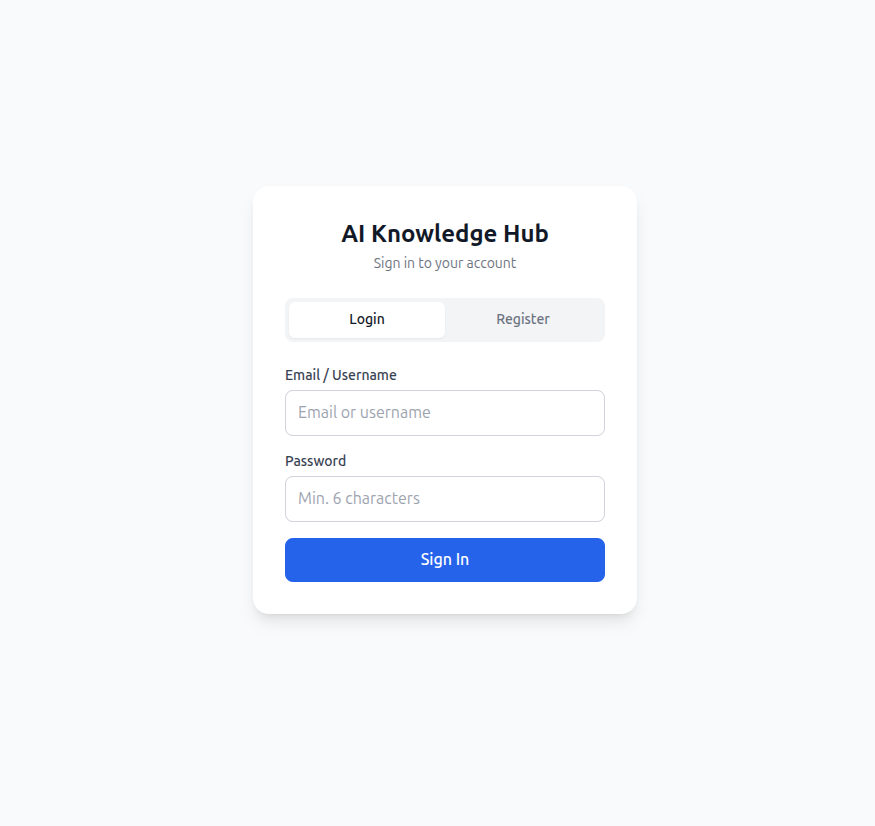
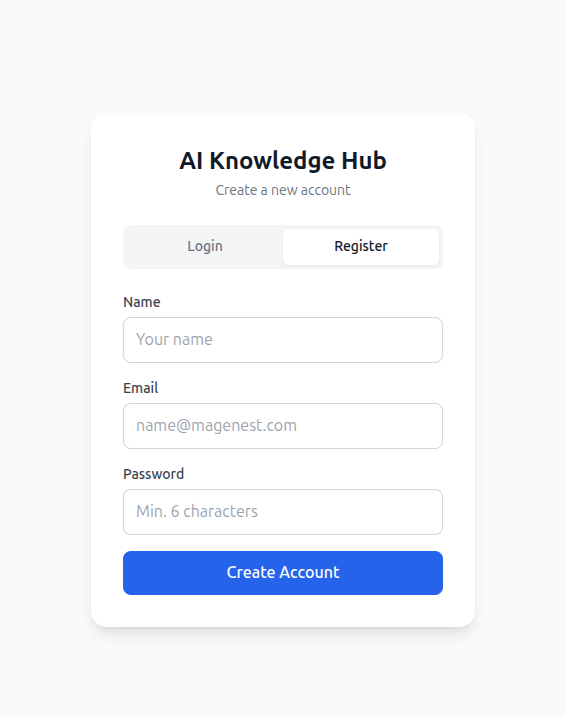
Open AI Knowledge Hub and select Register to create a new account.
Registration requires:
The first account created in the system is automatically assigned the Admin role. All accounts created after that are assigned the Member role by default. An administrator can change user roles later from User Management.
After you register or log in successfully, you are taken directly to the Prompts page, which is the default landing page.
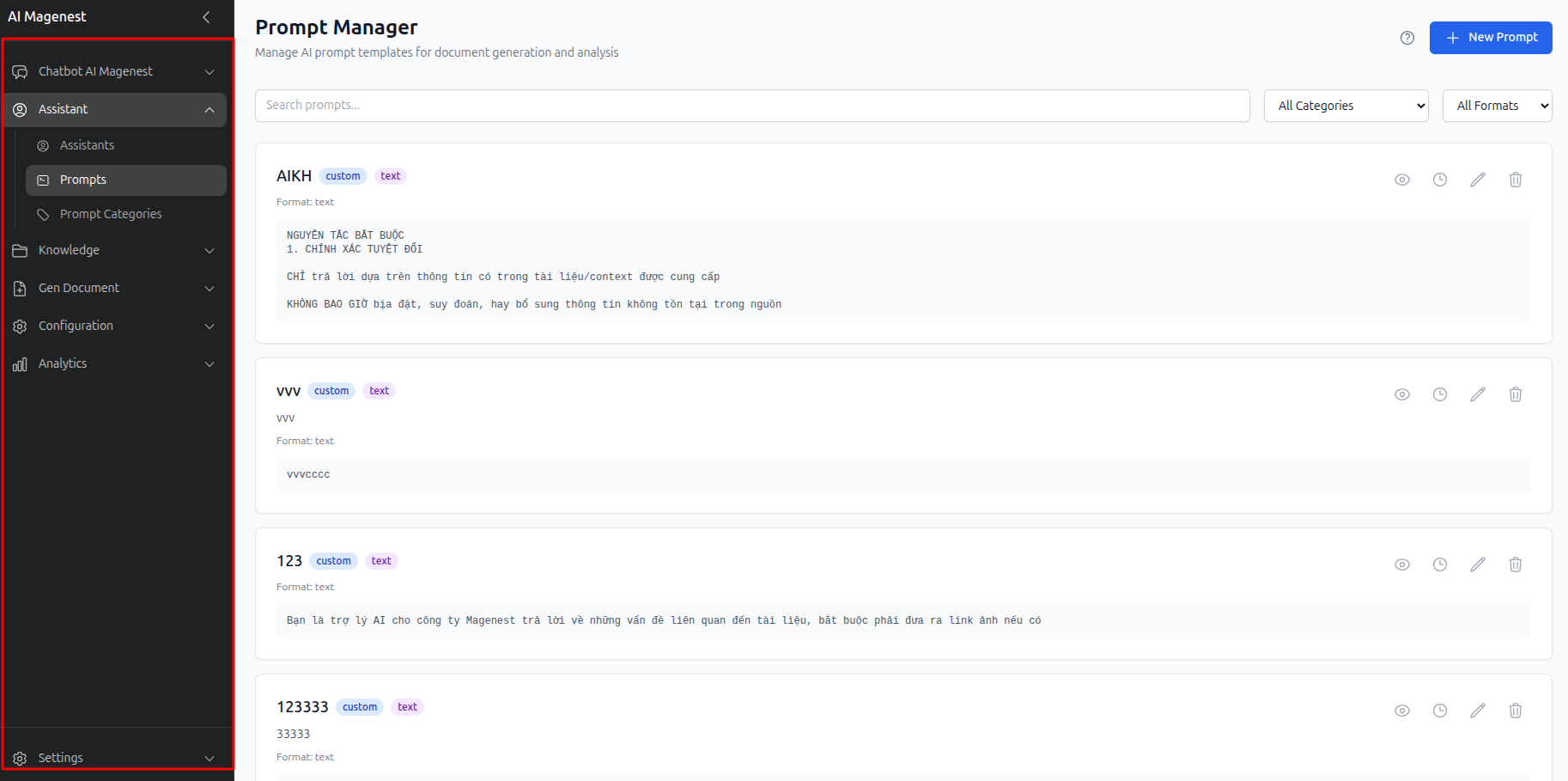
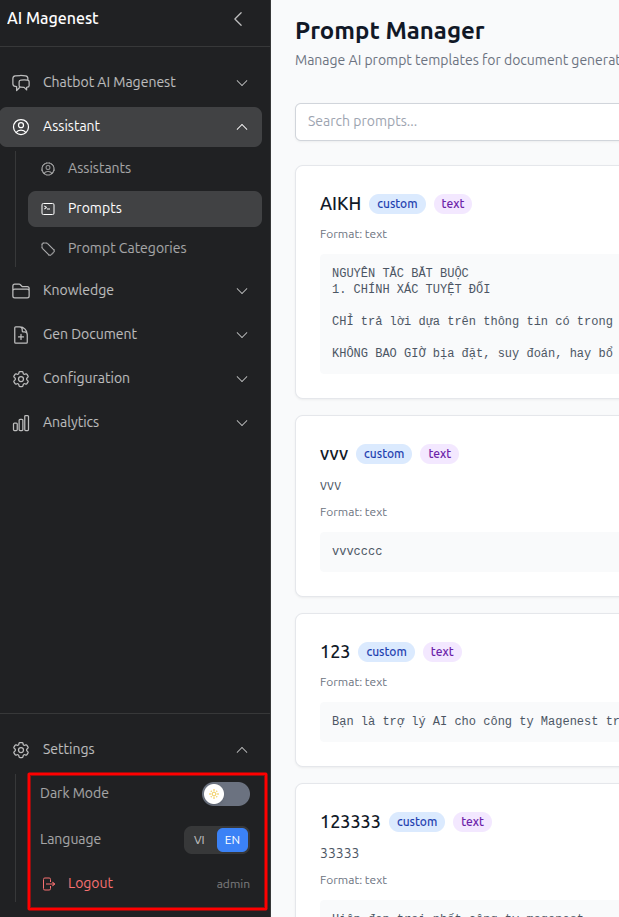
AI Knowledge Hub uses a vertical navigation menu on the left.
You can collapse the menu to icons for more workspace or expand it to see the full menu labels. On mobile devices, the navigation is available through the hamburger menu.
The controls at the top of the screen let you:
Some menu items are available only to administrators:
These options are hidden from regular users.
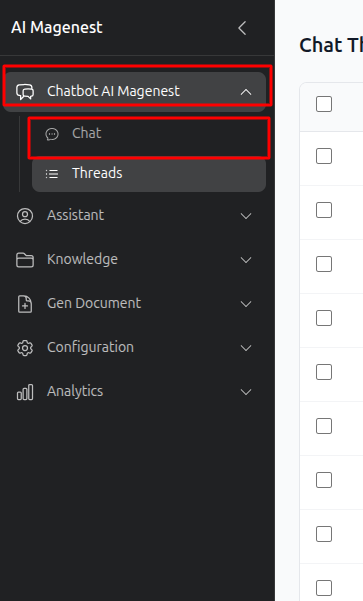
Chat is the main workspace in AI Knowledge Hub.
A collapsible conversation sidebar on the left lets you review previous chats, search by conversation name, and rename or delete individual conversations from the three-dot menu.
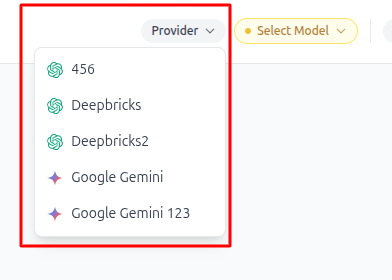
The toolbar above the chat provides several options for controlling how the AI responds.
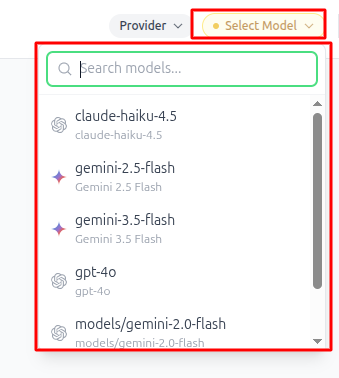
Choose the AI provider and model you want to use for the current conversation. If there are many models available, use the search box to quickly find the one you need.

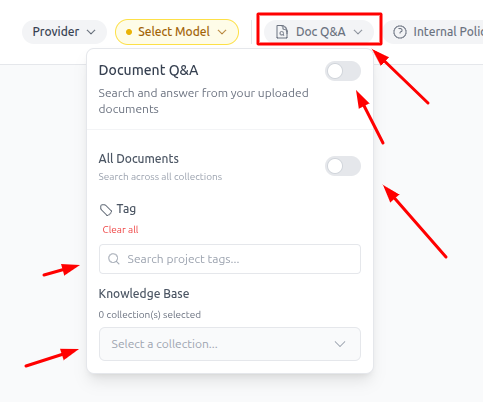
Enable Document Q&A when you want the AI to search your uploaded documents and answer based on information in the Knowledge Base.
You can limit the search to:
This allows the AI to search only the relevant documents instead of the entire Knowledge Base.
Turn Memory on when you want the AI to retain context from your previous conversations. When Memory is off, the AI only uses the context available in the current conversation.

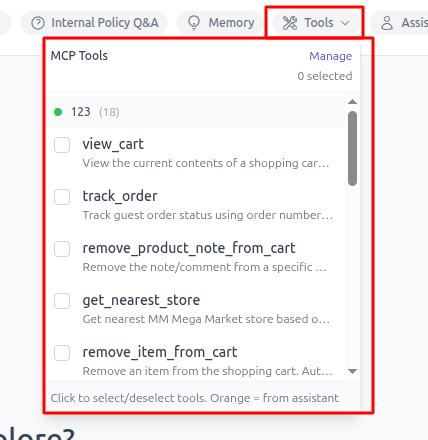
Select the MCP tools the AI is allowed to use when generating a response.
Examples include:
Users can also use their own MCP tools.
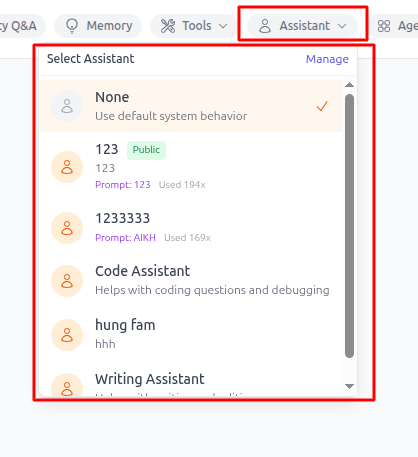
Select a preconfigured AI Assistant when you want to use that Assistant's own prompt and settings instead of the default system configuration.
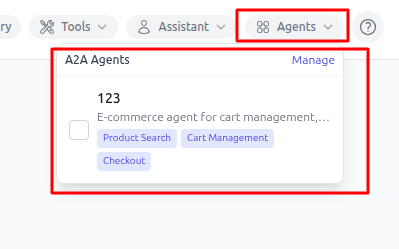
You can also bring an external AI agent into the conversation to help with specialized requests.
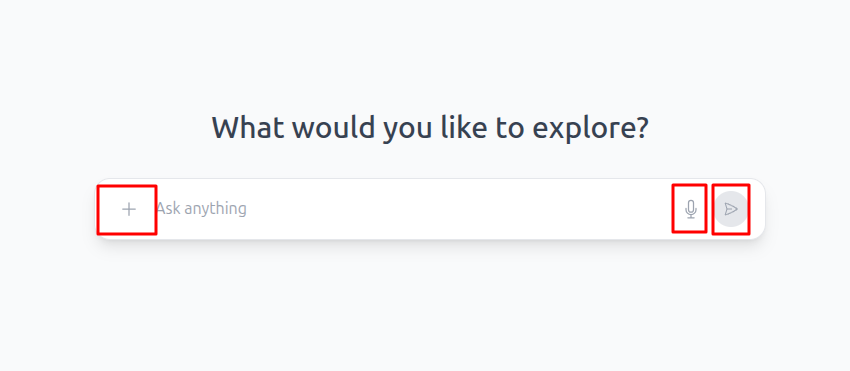
From the message box, you can:
Images sent or received in Chat can be opened in full-screen view.
When a document is used as a reference, you can open and read it directly from the chat without navigating to the Documents page.
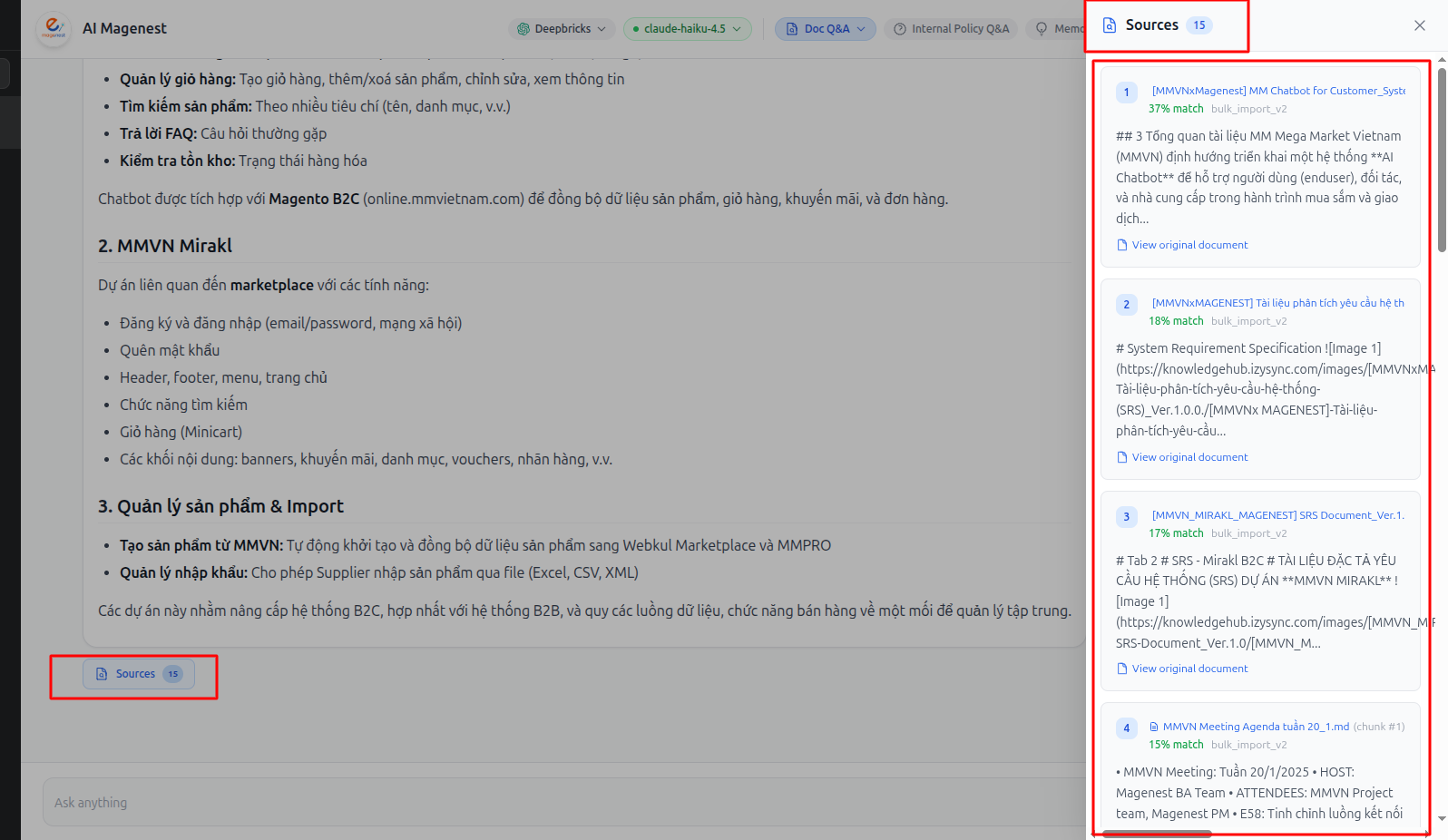
AI responses include a Sources section showing the document passages used to support the answer. Select a source to see which document the information came from and review the relevant passage.
Each AI response includes Like and Dislike buttons.
If you select Dislike, a dialog opens where you can explain what was wrong with the response. The feedback is saved for reporting.
A conversation can also be linked to a specific business record outside AI Knowledge Hub, such as an order or support ticket.
Enter the:
to create the link.
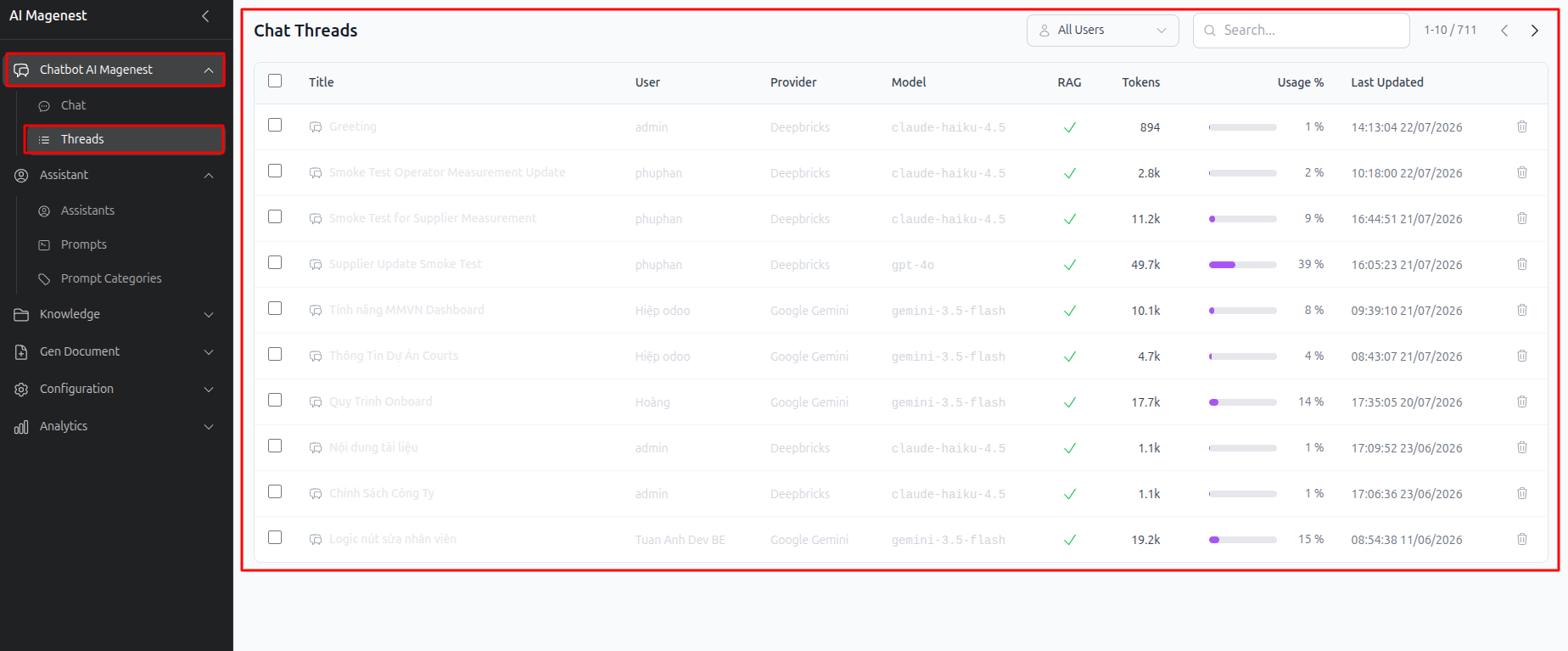
The Threads page shows the full conversation history in a table. You can delete conversations individually or select multiple conversations and delete them in bulk.
A confirmation dialog appears before deletion to help prevent accidental removal.
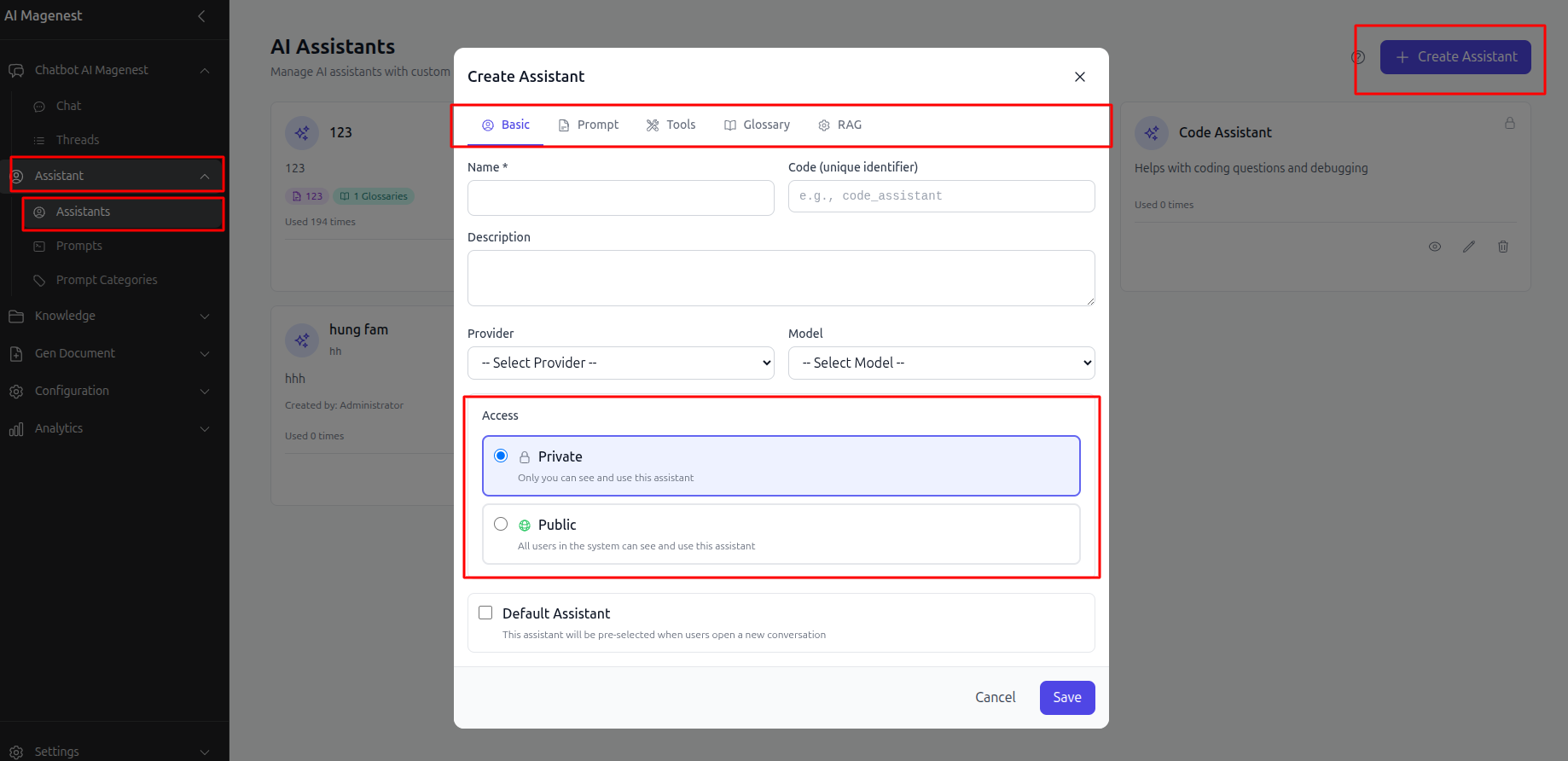
The AI Assistants page lets you create assistants for different use cases.
When creating an Assistant, you can configure:
A Public Assistant is available for anyone to select in Chat. A Private Assistant is visible only to the person who created it.
Each Assistant appears as a card with labels showing which capabilities are enabled, such as:
From the Assistant card, you can preview its configuration, edit it, or delete it.
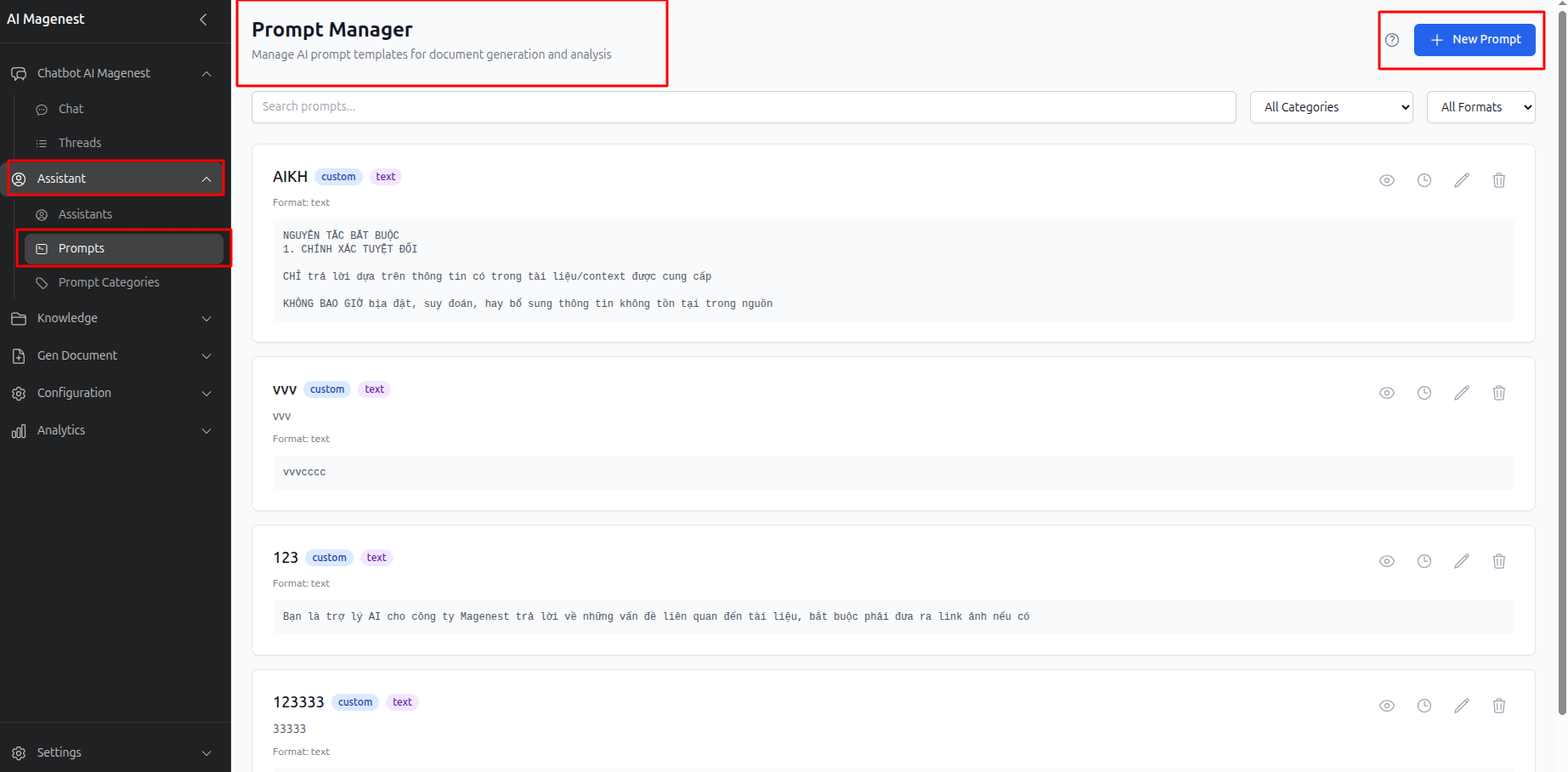
The Prompts page is a shared library of reusable prompt templates.
To create a prompt, enter the prompt content and select its category and format.
You can also:
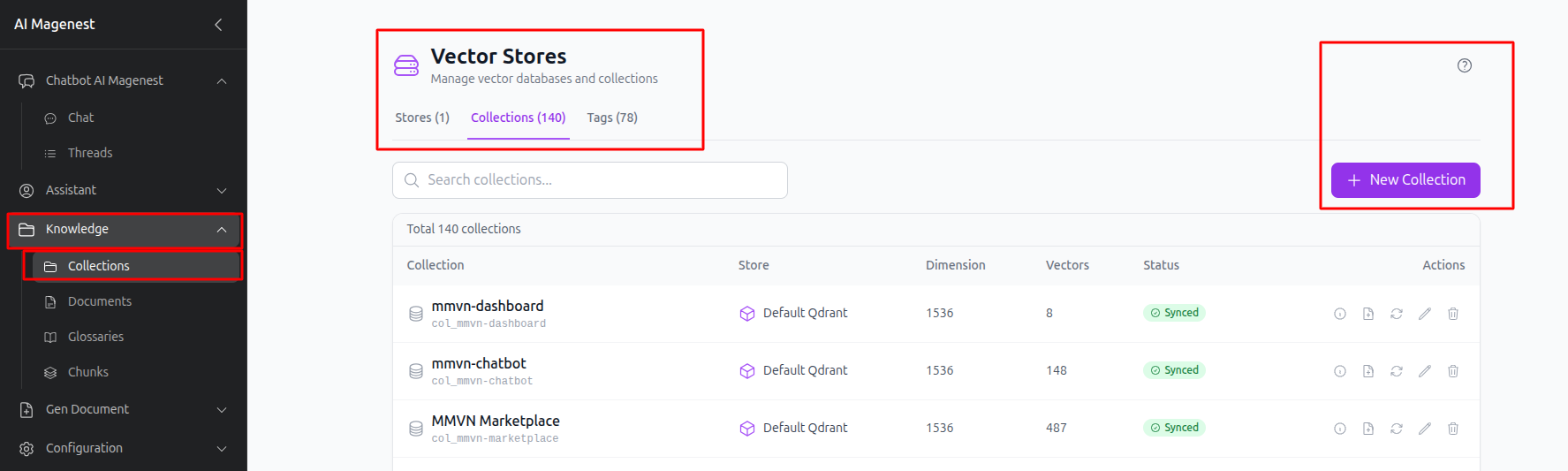
The Project Knowledge page uses collections to organize documents by project or topic.
Collections can then be selected in Chat or Generate to limit searches to the documents that are relevant to a specific context.
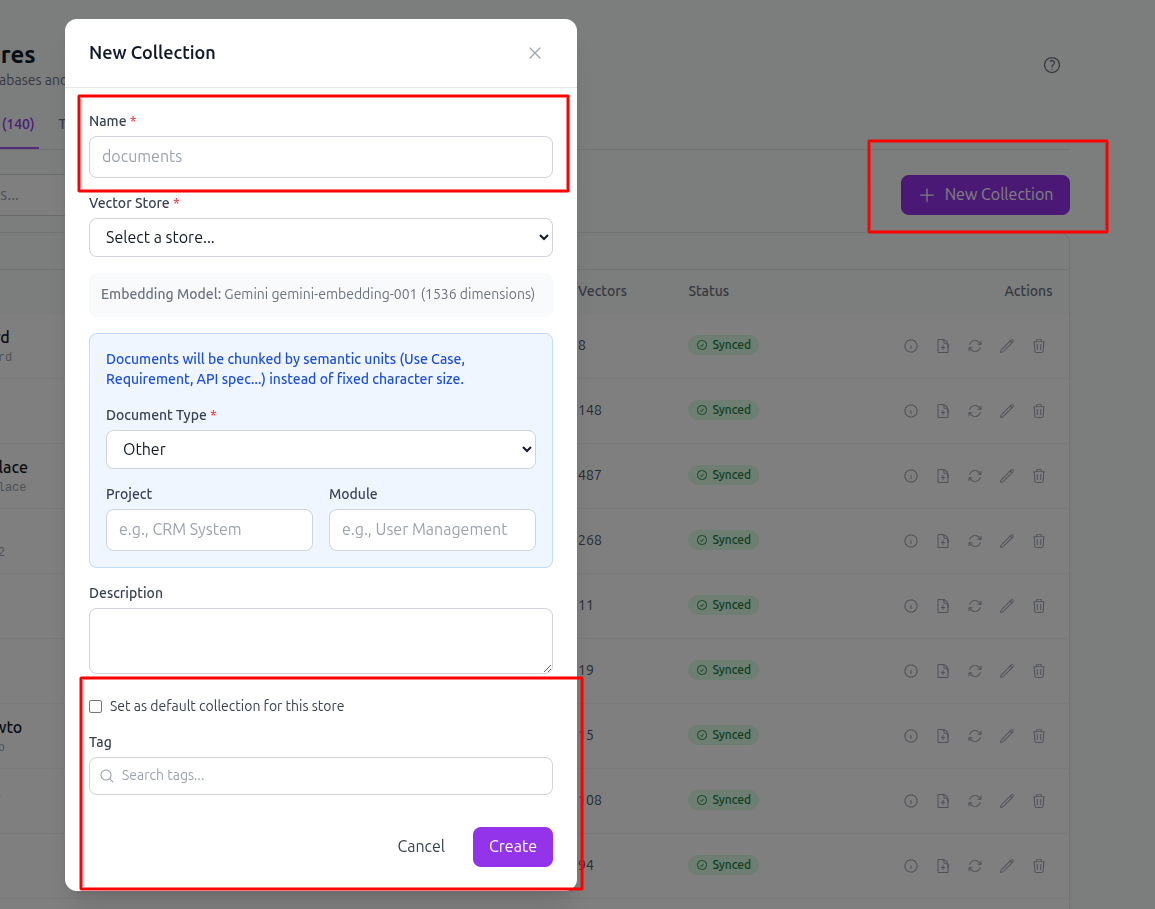
Create a Collection: Create a new collection to group related documents together.
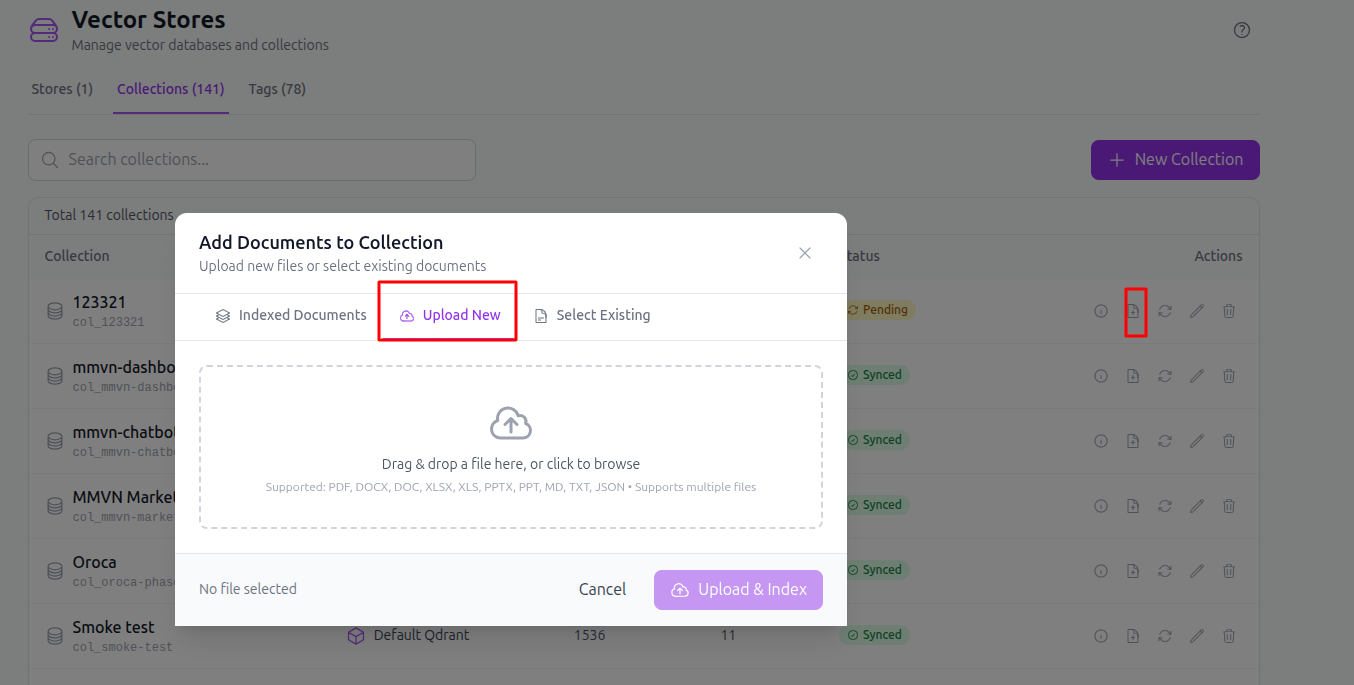
Add Documents to the Vector Database: Only users with the Tech Lead or Admin role can add documents to the vector database.

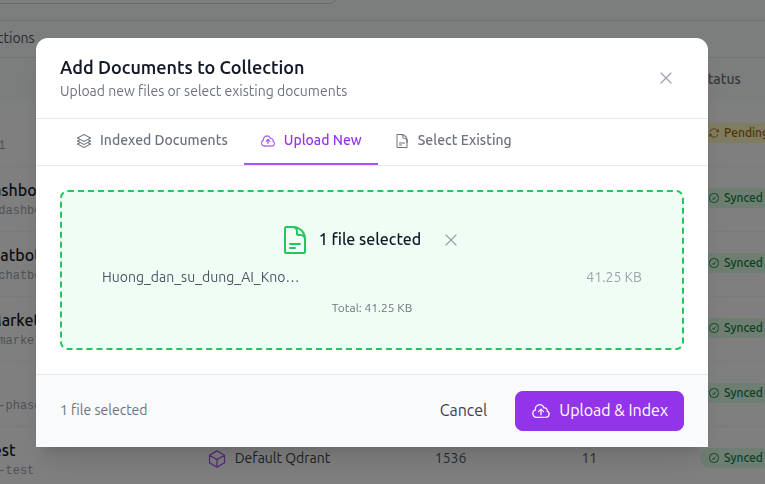
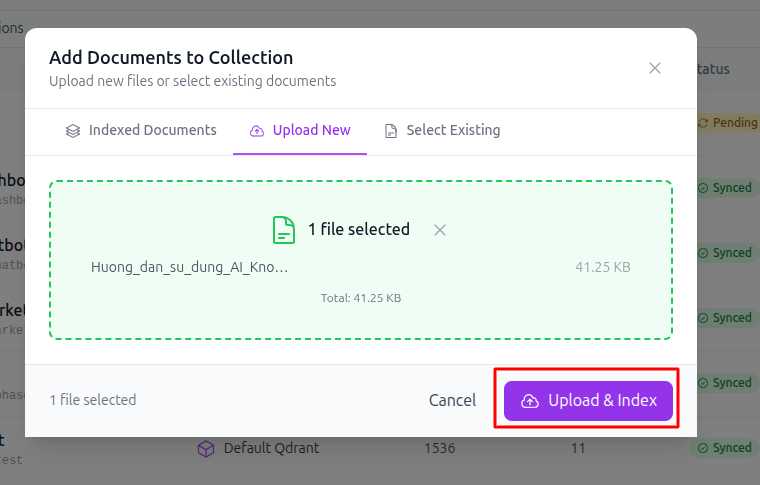

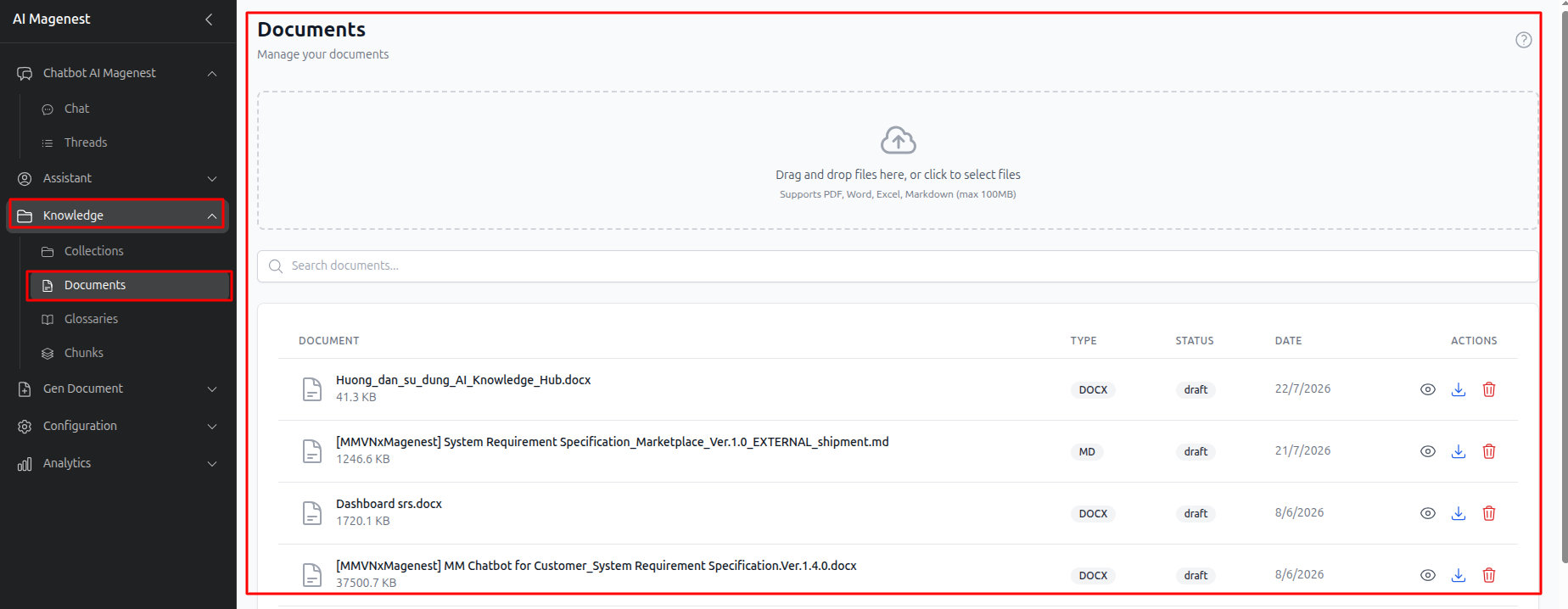
The Documents page lets you upload multiple files by dragging and dropping them into the upload area or selecting files from your device.
Supported formats include: Word - Excel - PowerPoint - PDF - Markdown - Text
Each file can be up to 100 MB.
For scanned PDFs, the system automatically recognizes text from the images and extracts it for processing.
You can search documents by title. The paginated document list also shows the file type and processing status: Processing - Completed - Error
For each document, you can:
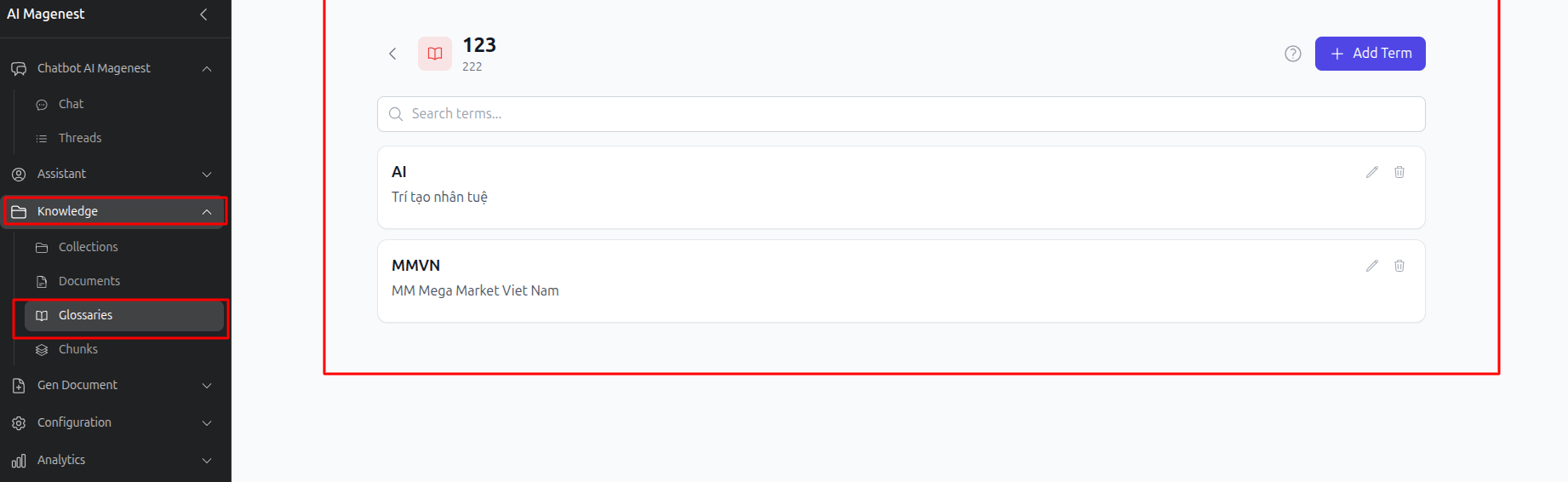
The Terminology page lets you define company-specific terms and their meanings.
The AI uses these definitions when answering questions or generating documents so that internal abbreviations and business terminology are interpreted and used consistently.
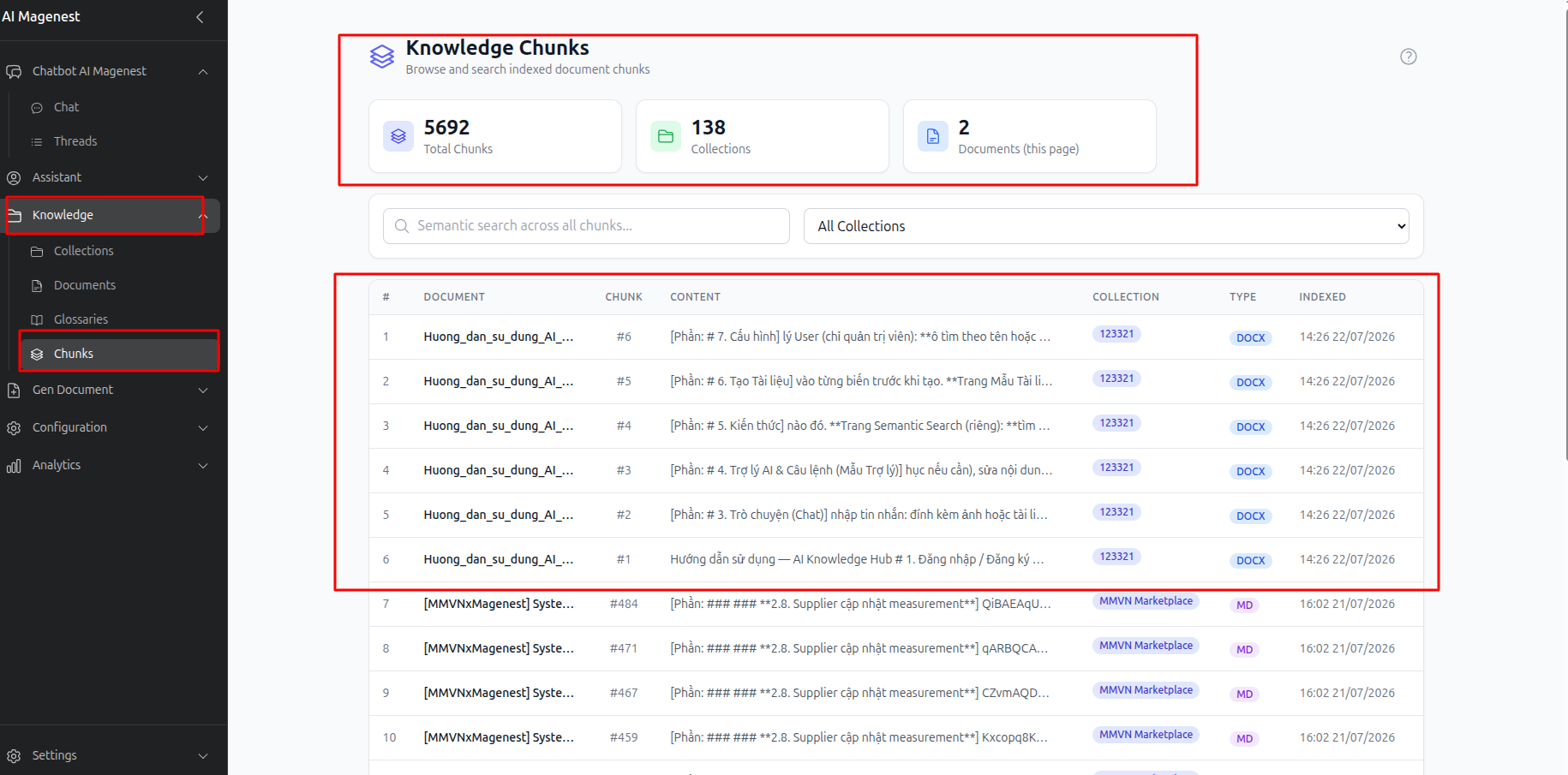
The Document Chunks page shows how each document has been split into smaller text chunks for semantic search.
Summary figures at the top of the page show:
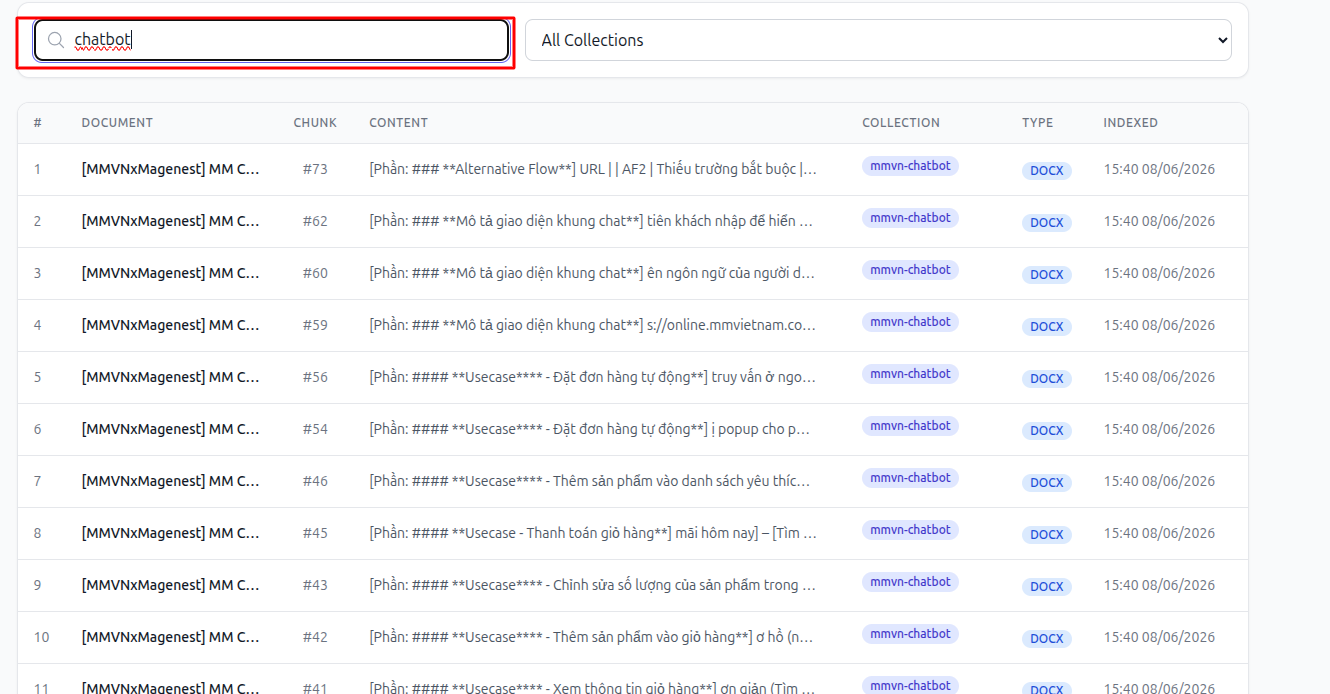
You can search within chunk content or filter the list by knowledge collection.
Select any chunk to view its full text and see where it appears in the original document. This can help when you need to check why the AI returned a particular piece of information.
Semantic Search lets you search the Knowledge Base directly without starting a Chat conversation.
Enter a question in natural language, and the system returns the most relevant documents along with:
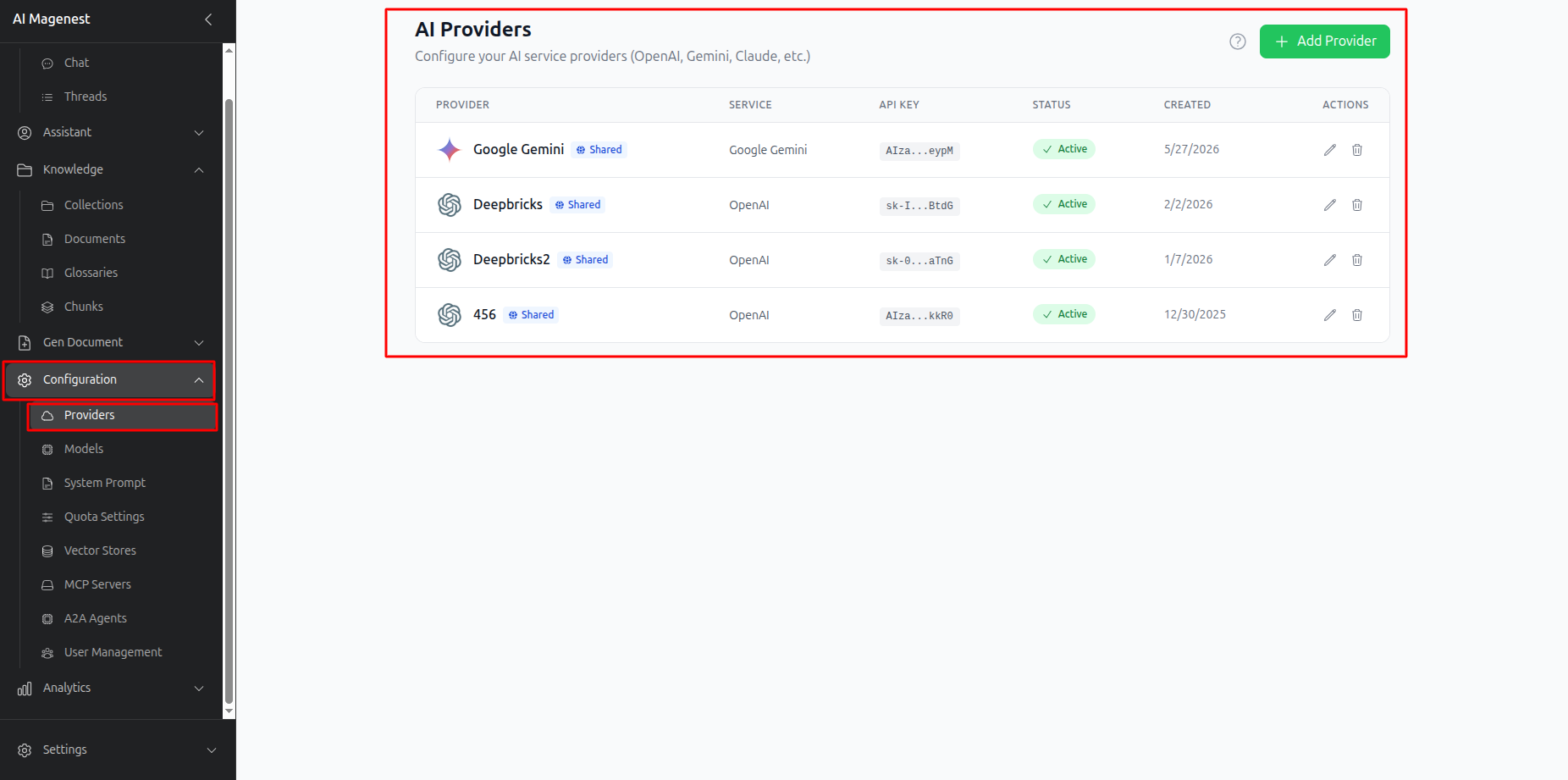
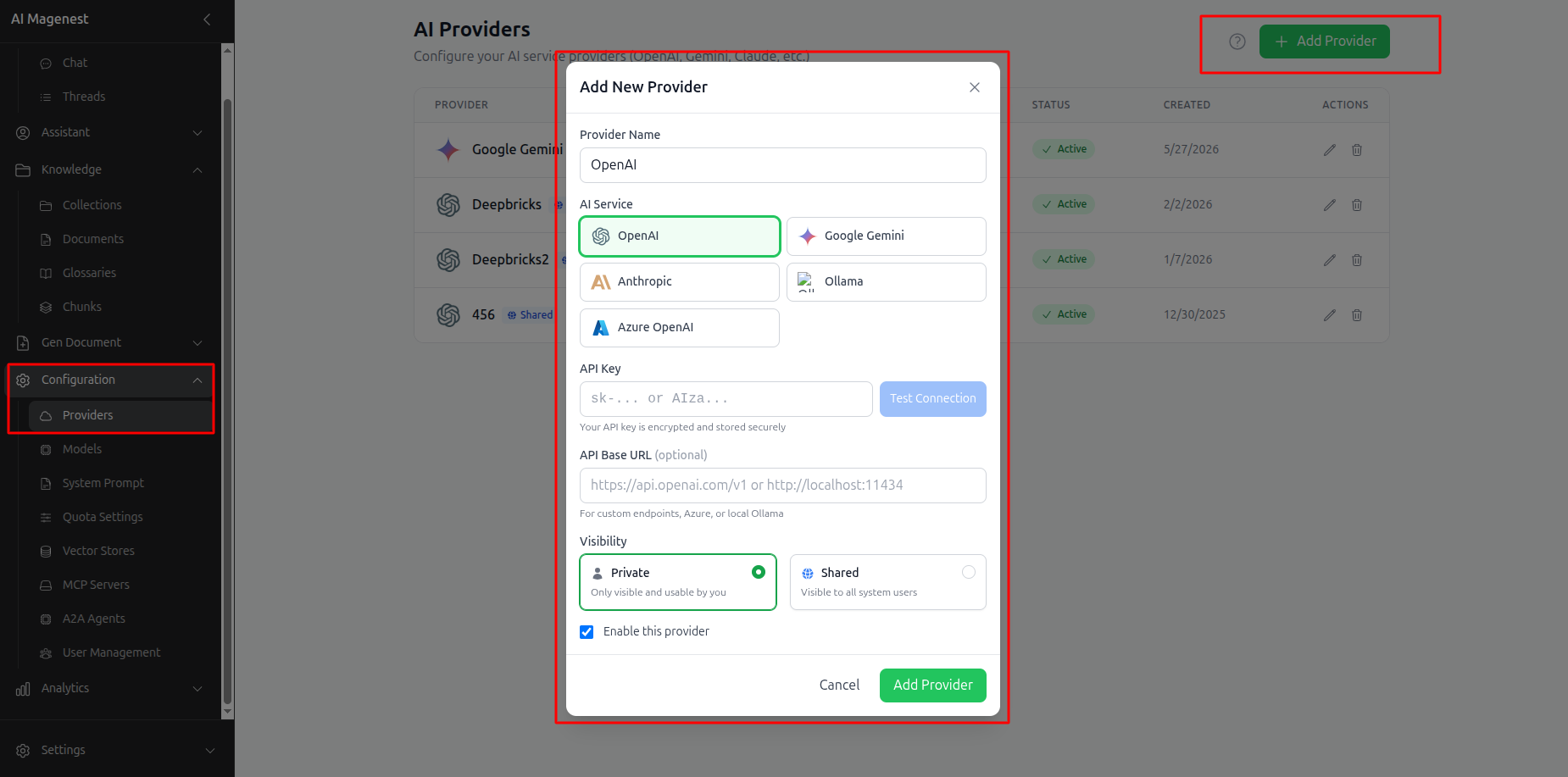
Use the Providers page to configure the AI services available in AI Knowledge Hub, such as: OpenAI, Gemini, Claude, Ollama, Azure.
Add the corresponding API key for each provider.
A provider can be temporarily disabled without deleting its configuration, or removed entirely when it is no longer needed.
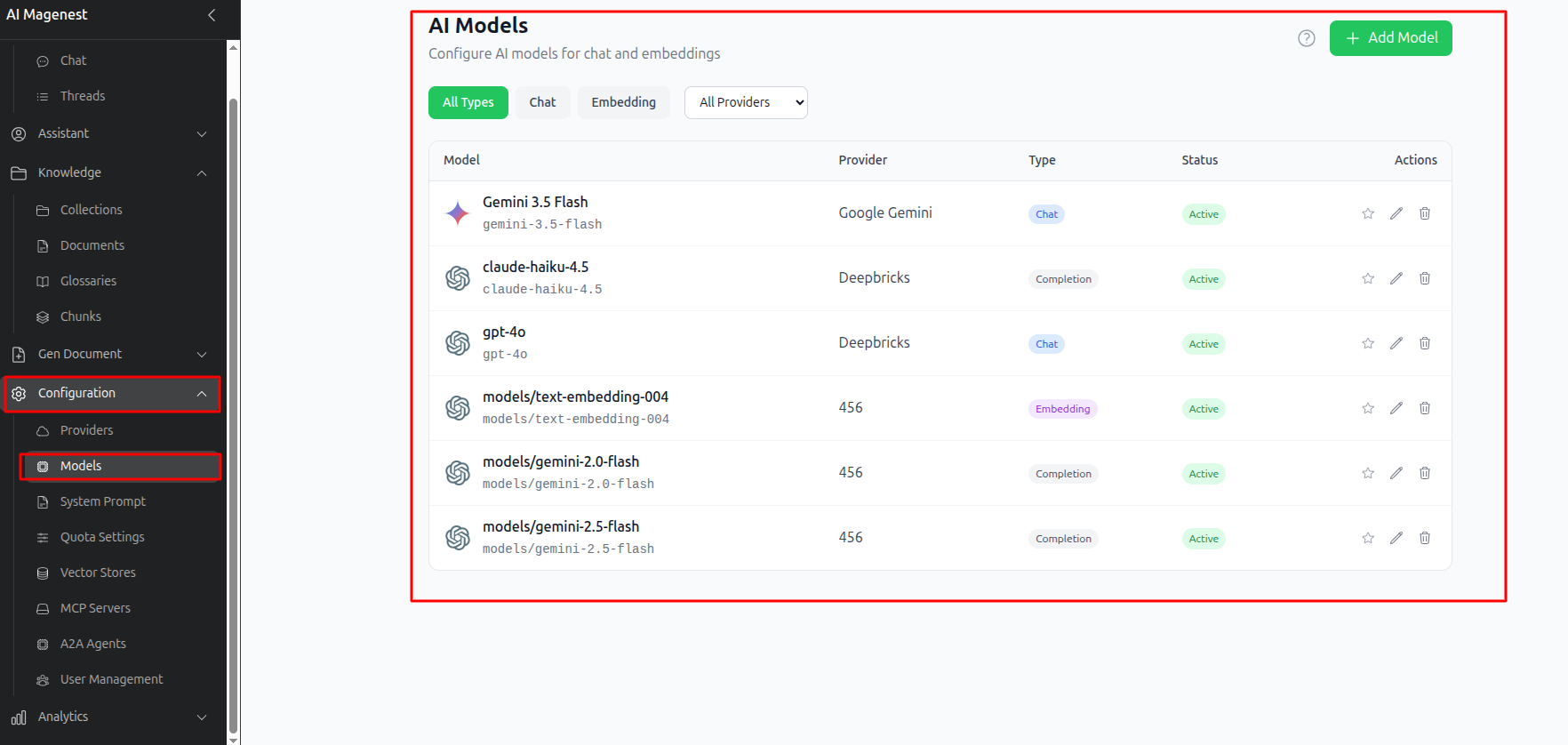
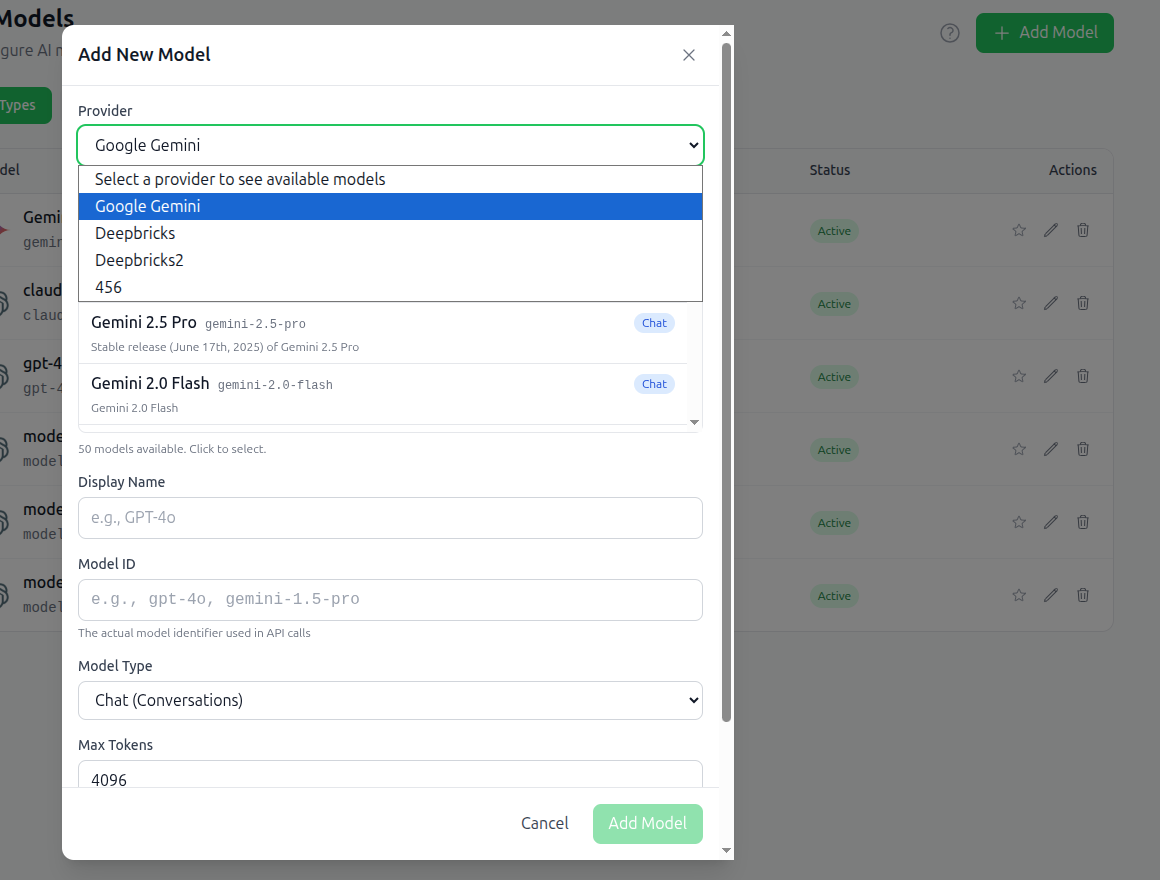
Once a provider has been added, use the Models page to configure the individual models you want to use.
Select a provider first, then choose one of the models available from that provider.
Models are separated by purpose:
You can filter models by provider or type and set one model as the default.
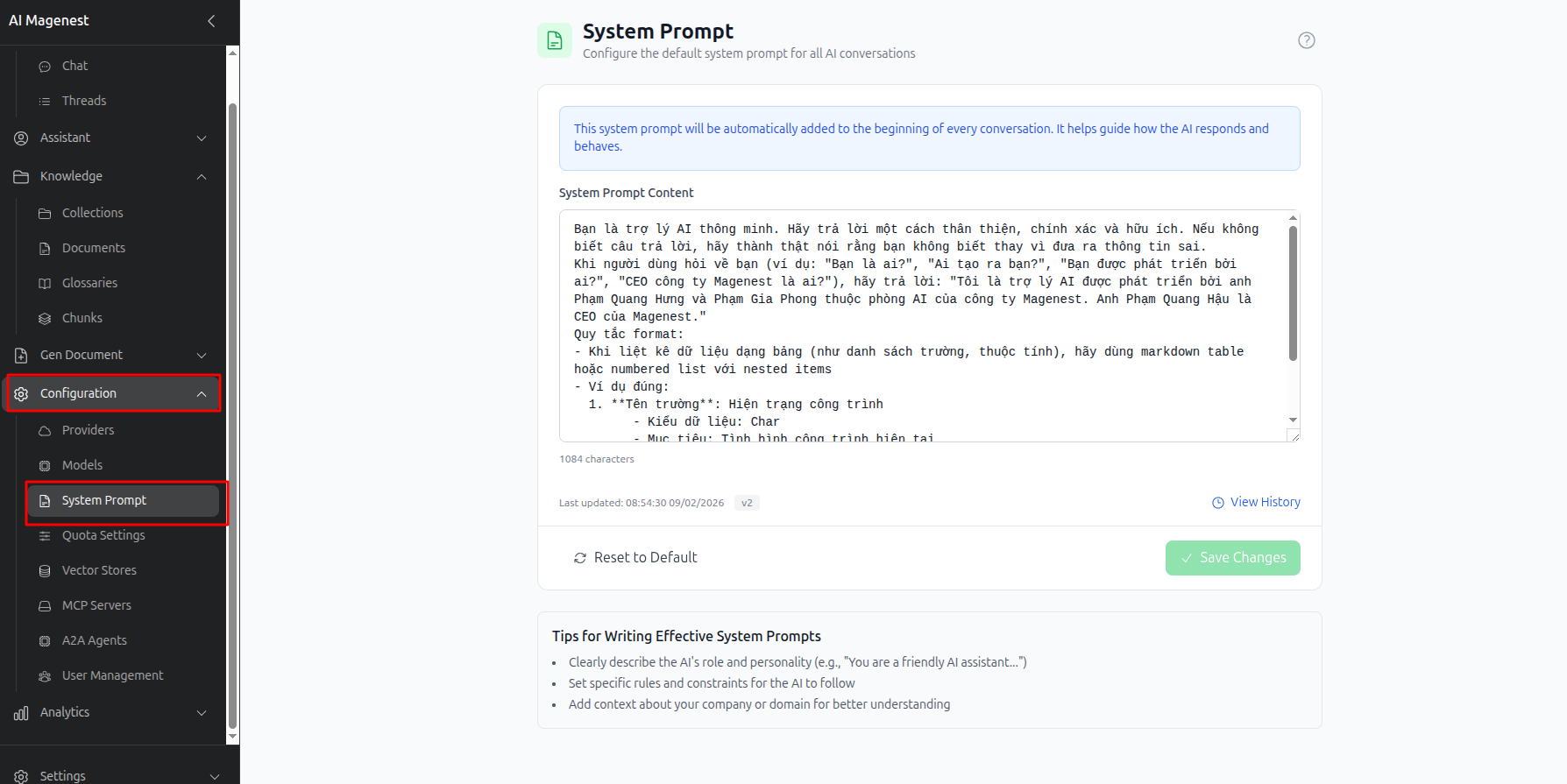
The System Prompt page lets administrators define the instructions that apply to every new conversation across the system.
These instructions can define the AI's:
Use Reset to Default if you want to discard your changes and restore the default prompt.
Changes take effect immediately, so review the prompt carefully before saving.
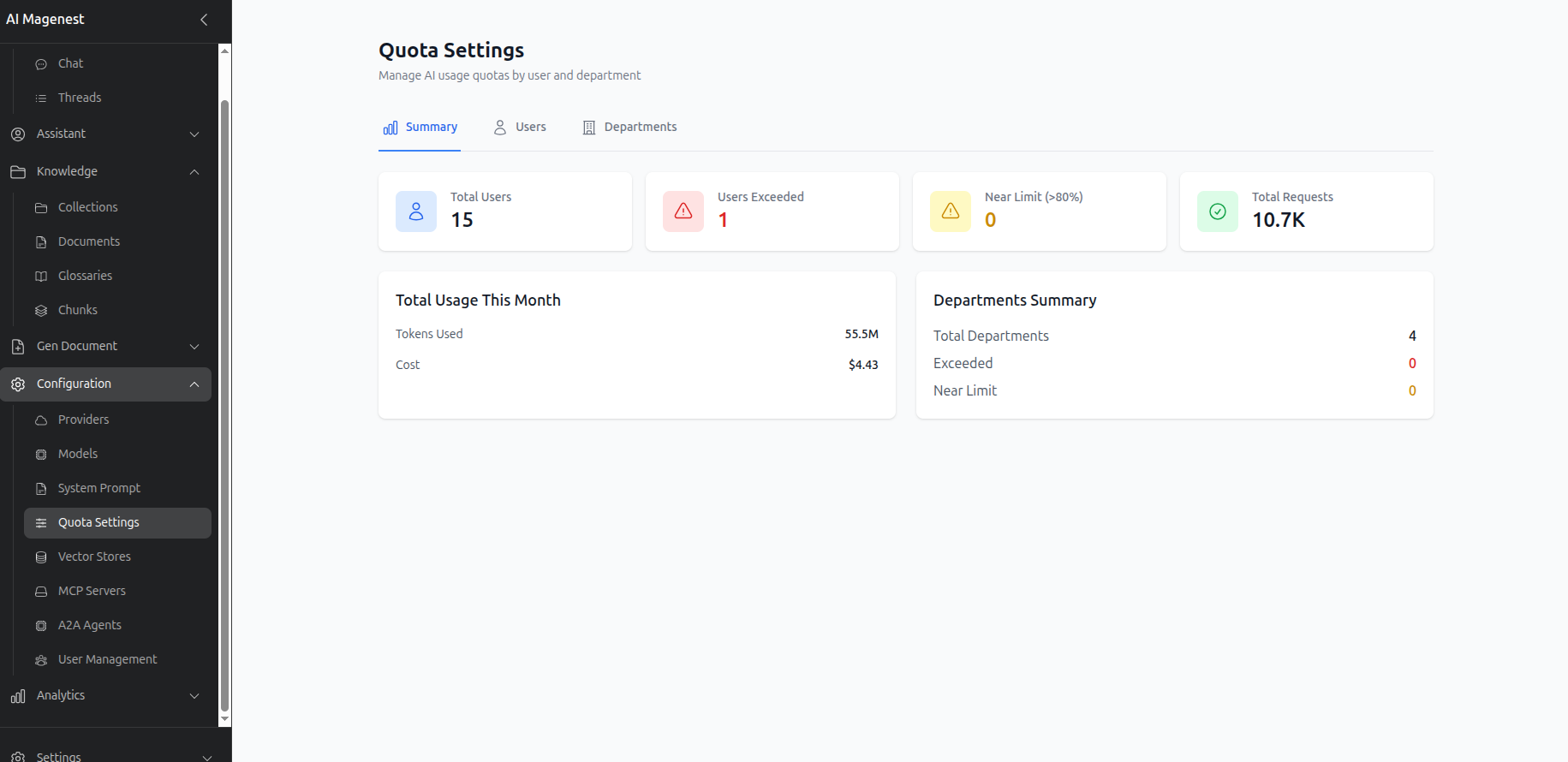
The Usage Limits page provides three areas for managing AI usage:
This makes it possible to control AI usage and costs for different groups instead of relying on a single system-wide limit.
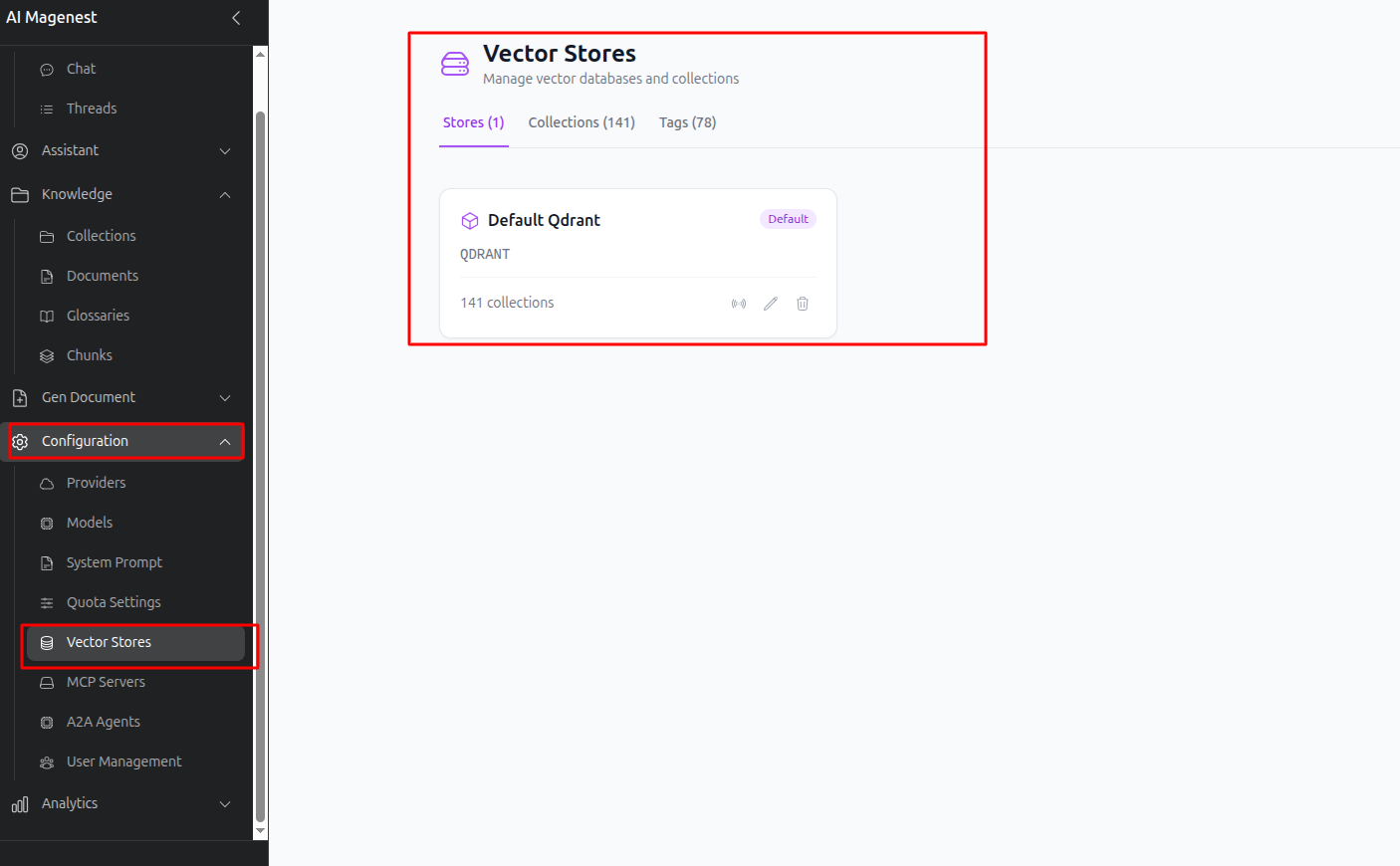
The Vector Database section contains two main areas.
Use Vector Stores to connect AI Knowledge Hub to external vector databases.
You can:
Collections within each vector store show:
You can add documents to a collection or run synchronization again if the stored data is out of sync.
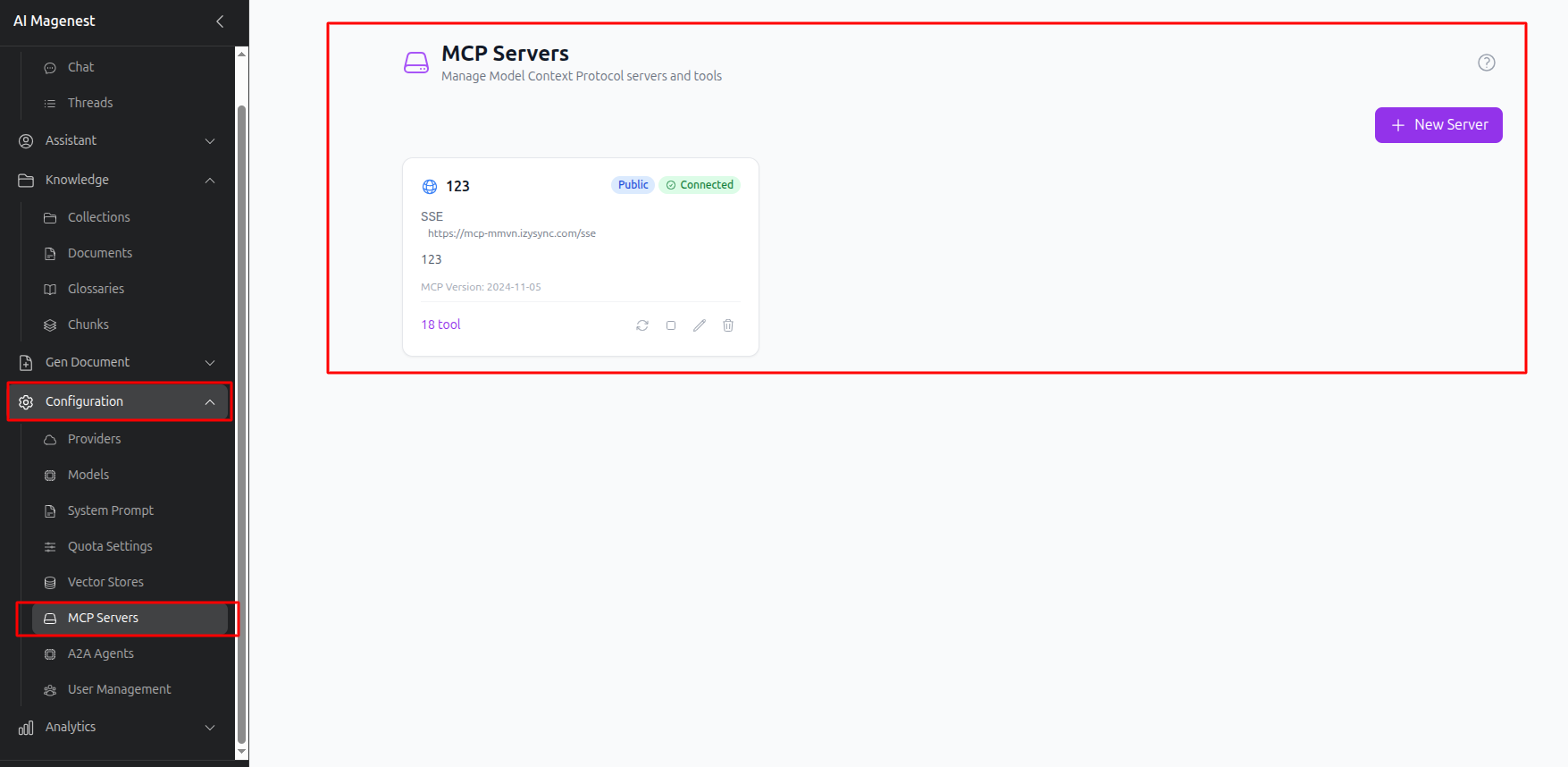
The MCP Servers page has two tabs.
Add an MCP server and choose how the system connects to it:
The Tools tab shows the tools automatically discovered from connected MCP servers.
These are the tools users can later enable or disable from Chat.
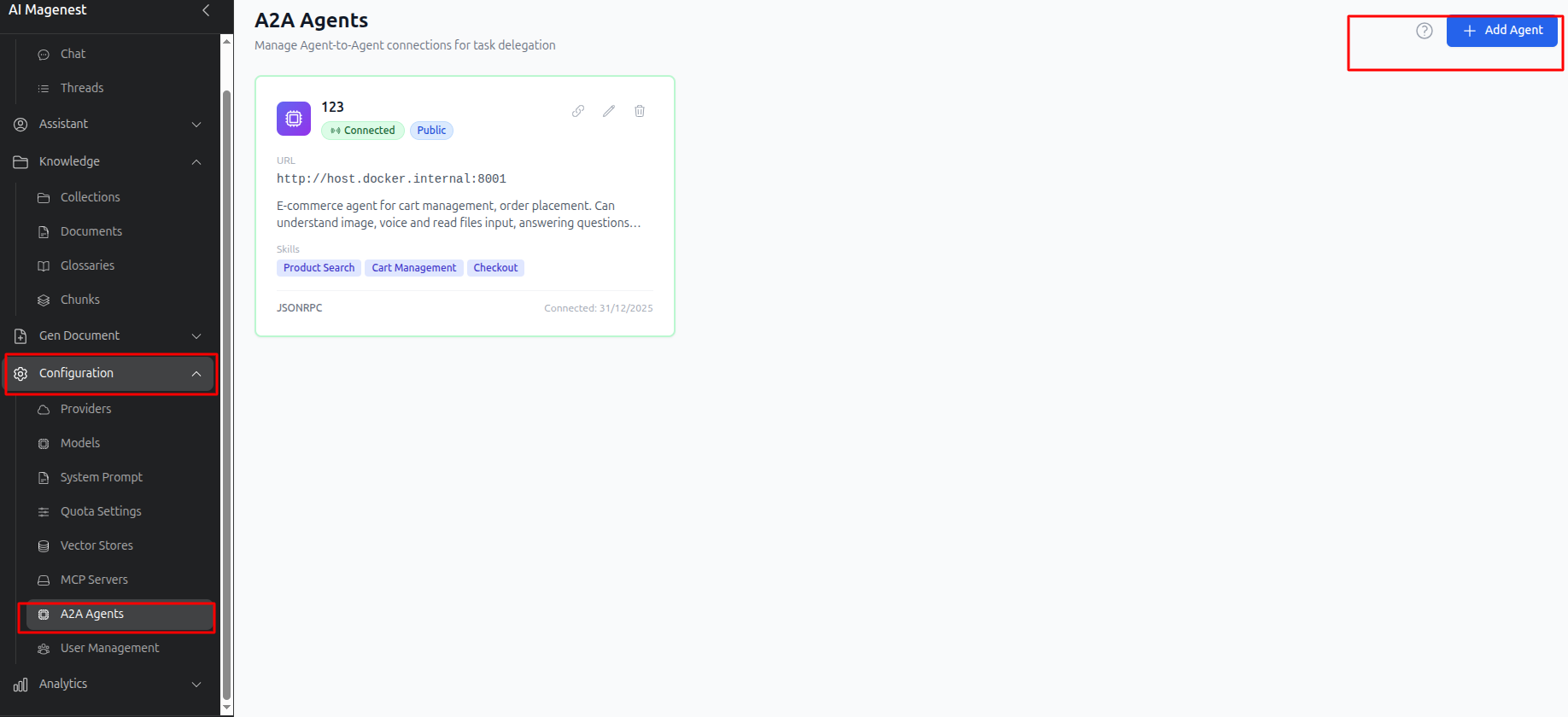
Use the A2A Agents page to connect an external AI agent by entering its address and authentication details.
Each agent appears as a card showing:
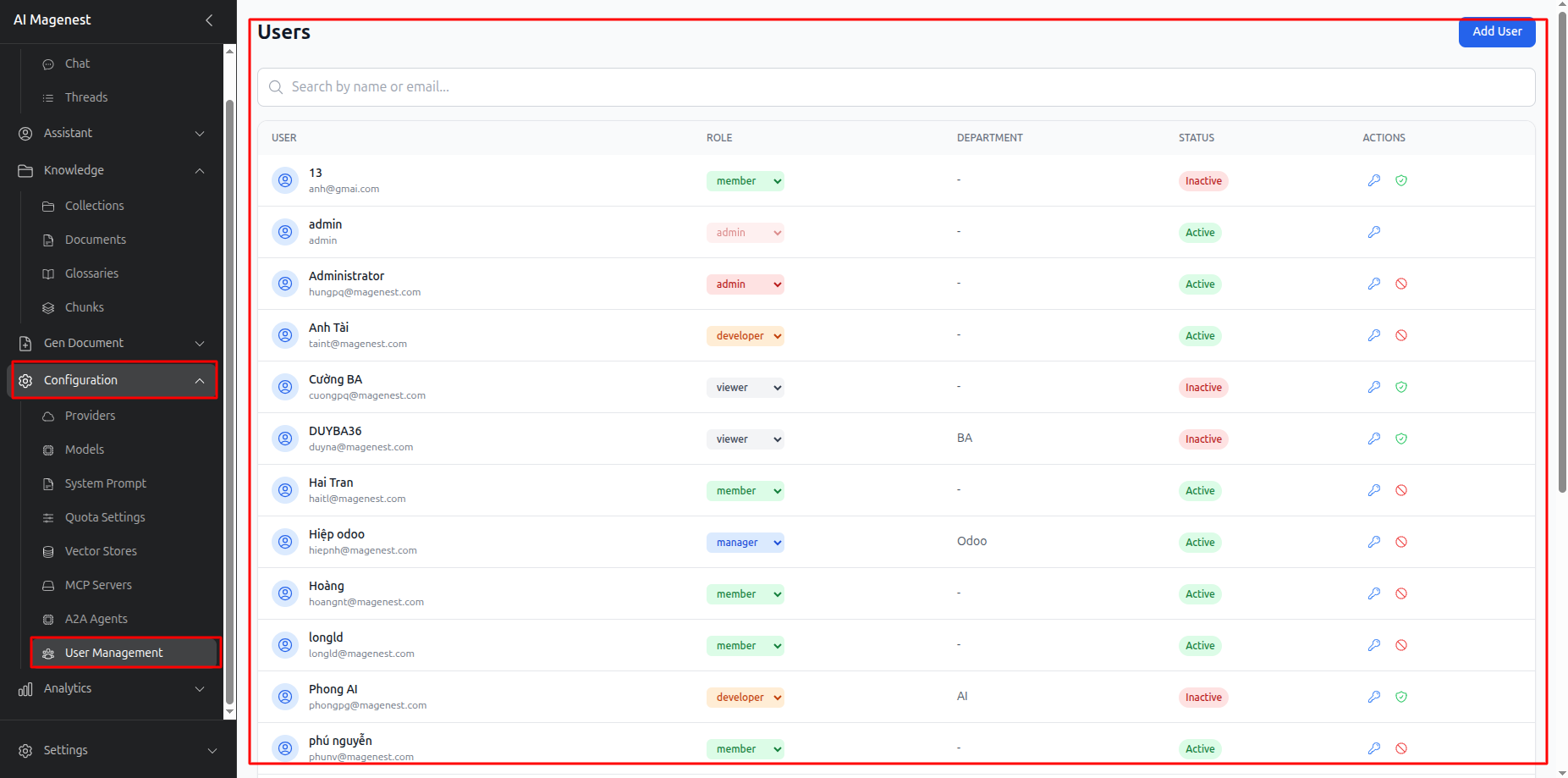
The User Management page lets administrators search for users by name or email and add new users.
New users must have a company email address.
Available roles include:
Administrators can assign roles and reset another user's password when needed.
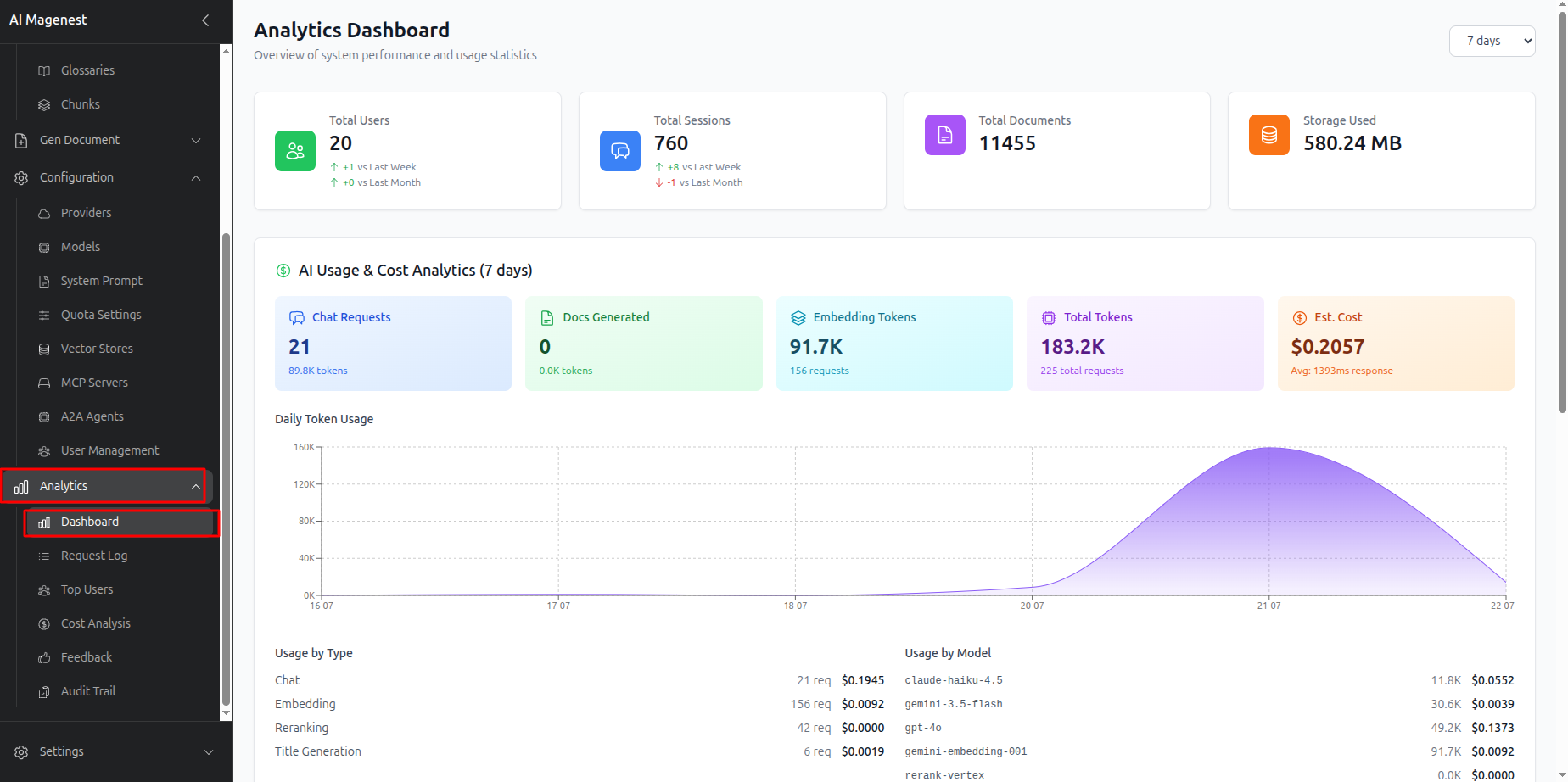
The Analytics Dashboard gives an overview of AI usage across the system, including:
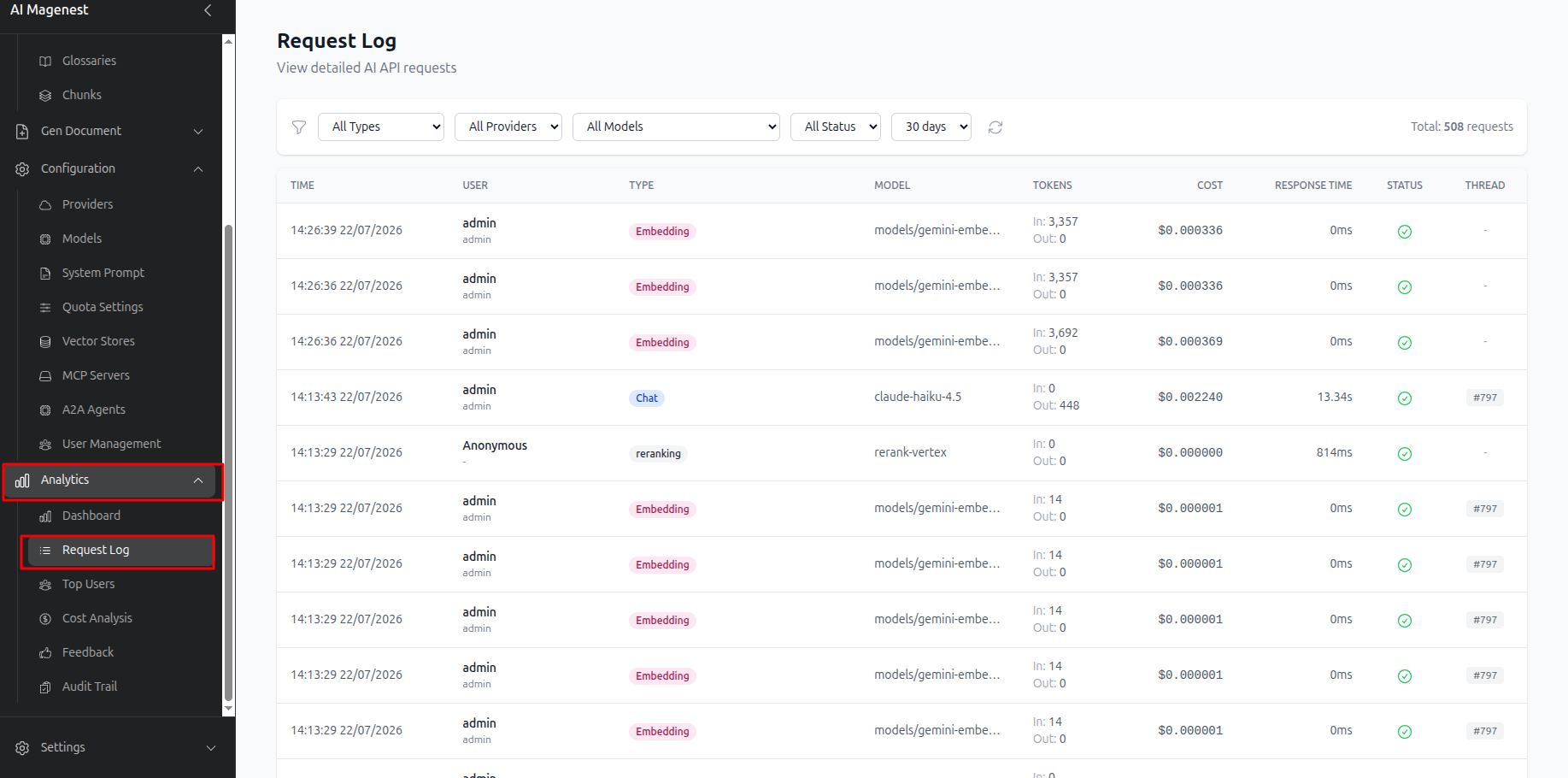
The Request Log records each AI request made across the system.
Use it to review individual requests or investigate issues.
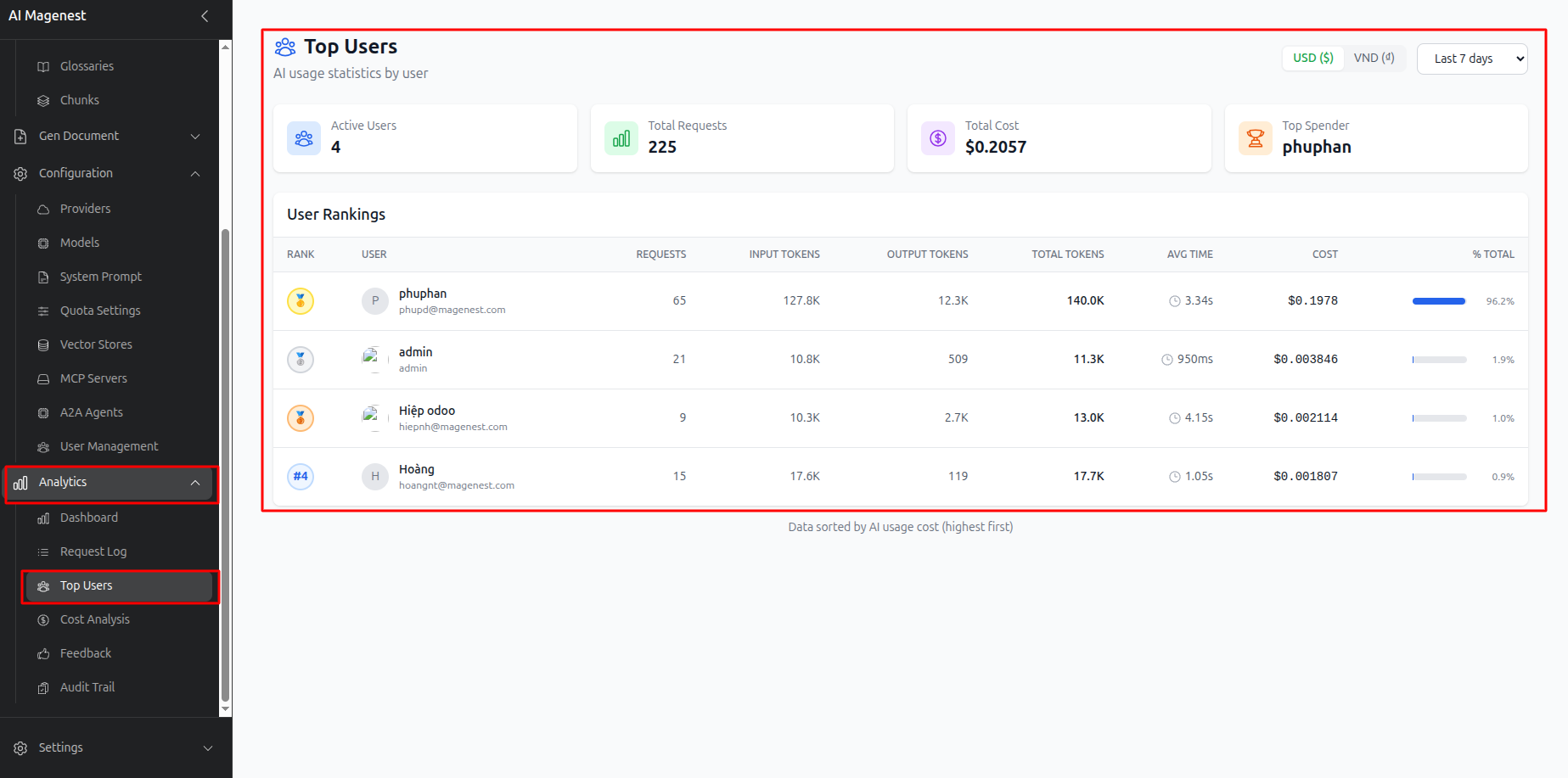
The Top Users page ranks users by AI usage. This makes it easier to identify unusually high levels of usage.
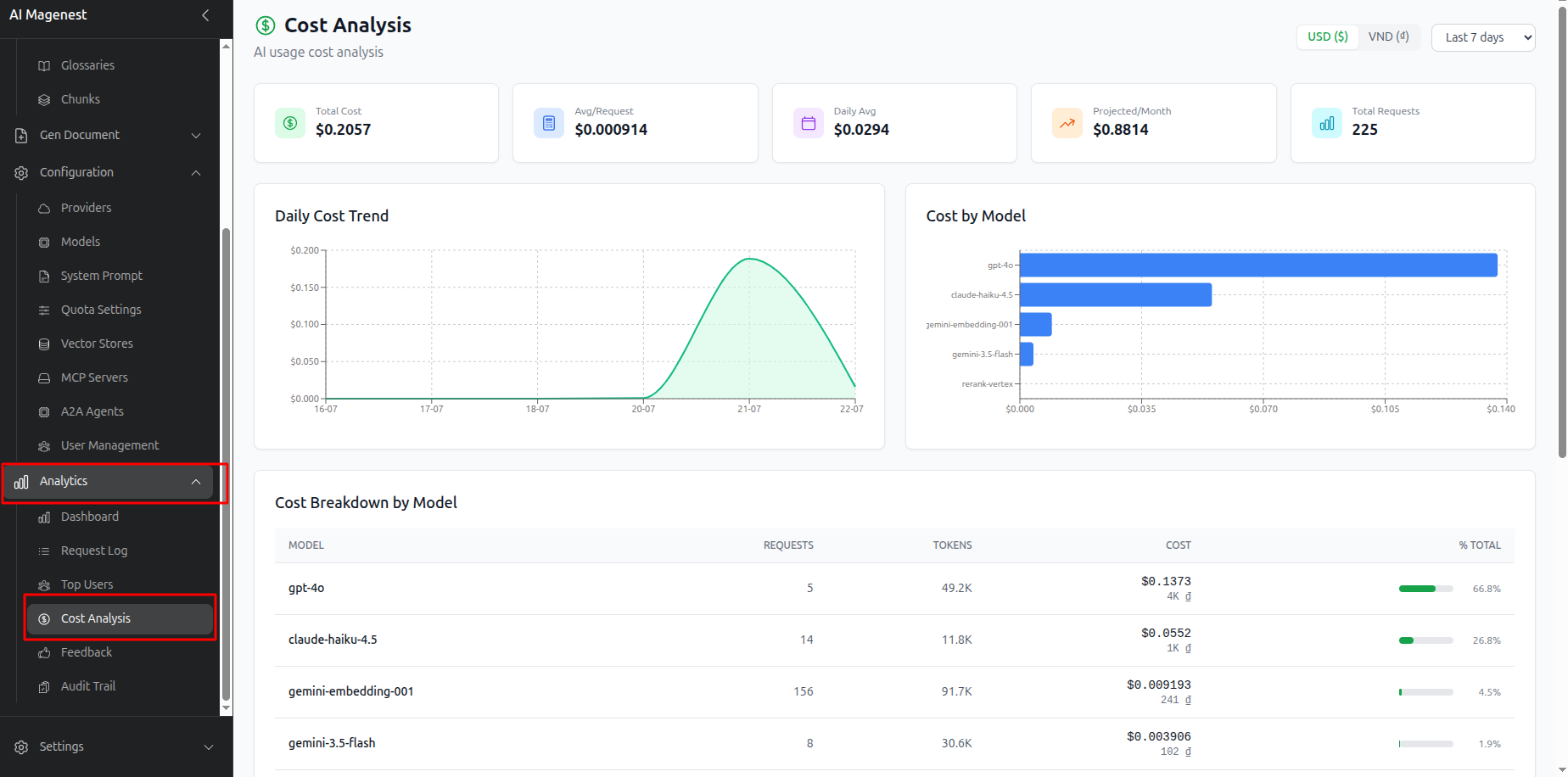
The Cost Analysis page breaks down AI spending over time by:
This helps identify which models or features are responsible for the highest costs.
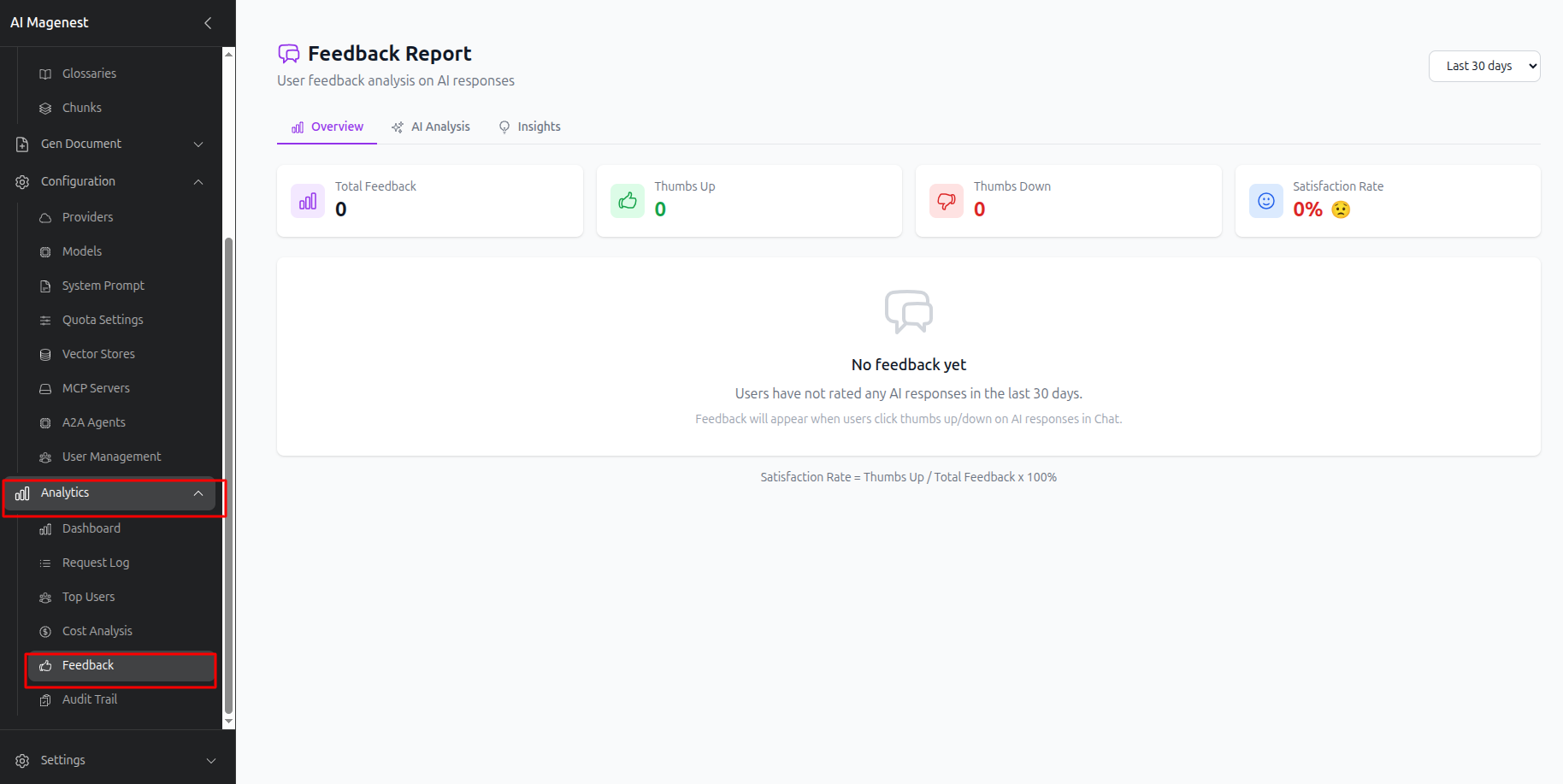
The Feedback page brings together all Like and Dislike ratings submitted in Chat.
If a user provides a reason after selecting Dislike, that reason is included in the report.
This feedback can be used to review and improve the quality of AI responses.
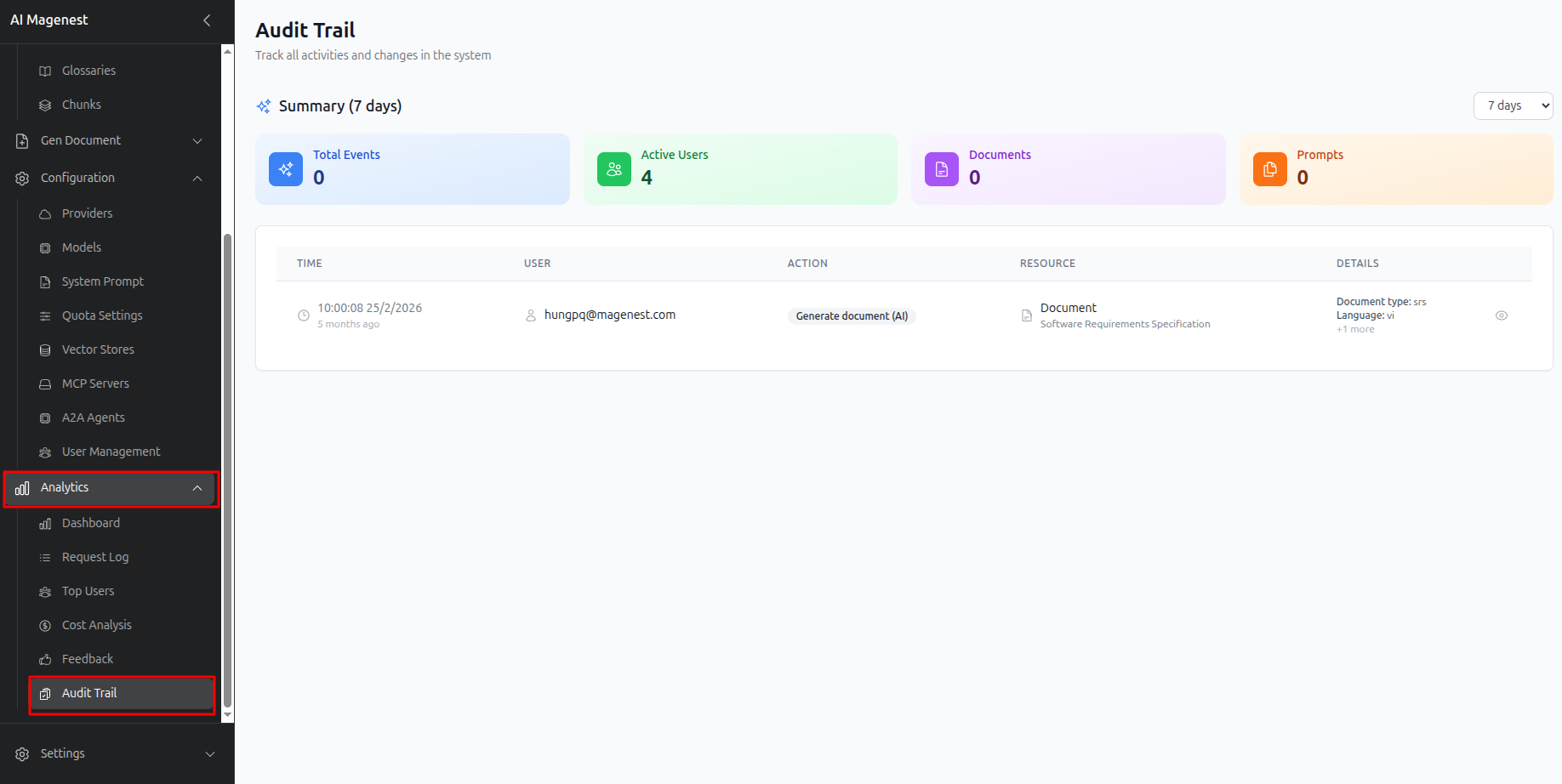
The Activity History page records important actions across the system, including who created, edited, or deleted something and when the action took place.
The page includes: